Library

 Profile
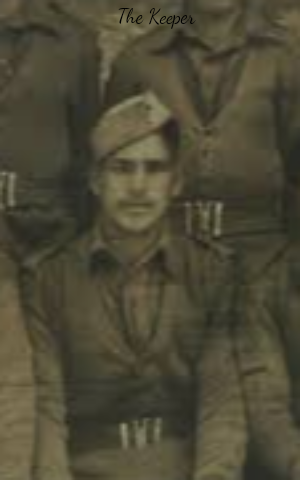
The Keeper
The Keeper

Let many thousands come,
With tanks, guns, helicopters and fighter planes,
Let them attack from the front, back, or from air,
Let them come in day or night,
Till the time I am there,
Not a person would be able to surpass,
The border of which I am the Keeper!
This brave real-life story is about that soldier who alone fought an army and protected the border till his last breath. He fought day and night, though injured and starving, he did not care for himself. He only cared for the nation. He only cared for its sovereignty, for its dignity. He died fighting but that does not end here. He is still protecting the borders. He is still there, he is our hero, our protector, our keeper!
Rifleman Jaswant Singh Rawat was born on 19th August 1941 in Baryun, Garhwal district; a soldier whose valour was celebrated even by his enemies. He is considered as the hero of the Sino-India War in 1962. According to a local legend, he single-handedly fought the Chinese army for three days. It was the last phase of the war in November 1962, and due to a lack of resources, his company was asked to go back. But, Jaswant Singh remained at his post and with the help of two local girls, Sela and Nura, Jaswant Singh set up weapons at three different spots and fired them continuously for three days. Thinking that a big contingent was firing at them, the Chinese Army did not advance further.
As time passed, the Chinese Army grew restless, as they knew no other way to counter the purported attack of the Indian Army. They finally caught the man who was providing food to Jaswant Singh and the two girls and interrogated him. The man told them the truth. The Chinese then surrounded Jaswant Singh from all sides. Nura was captured and Sela died in a grenade burst. Jaswant Singh was shot and his head was cut-off and taken by the Chinese army as a war souvenir.
After the war was over, the commander of the Chinese forces, impressed by the late Jaswant Singh Rawat's exemplary courage and determination, returned his head along with a brass bust made of the soldier. It is now installed at the site of the battle. He was posthumously awarded the Maha Vir Chakra for his bravery. Jaswant Singh's display of valour and his love for his nation has proved to be a great source of inspiration to all Indian soldiers since.
The battle had resulted in 300 Chinese casualties, most of whom were killed by Jaswant Singh Rawat single-handedly, whereas the 4th Garhwal Rifles lost two men and had eight wounded.
A memorial was constructed at the post where he repulsed the People's Liberation Army. The post which he held was renamed as "Jaswant Garh". Another honour bestowed upon him is that he continues to serve even after death; he has been awarded promotions as if he is still serving.
4th Garhwal Rifles was later awarded the Battle Honour Nuranang, the only battle honour awarded to an army unit during the war.
The Hindi movie titled 72 Hours: Martyr Who Never Died, directed by Avinash Dhyani, is based on the story of Rifleman Jaswant Singh Rawat.
Rawat's act of courage and exemplary grit has earned him a distinct place among all ranks of the federal army manning the unfenced 1,030 kilometres (650 miles) Sino-Indian border and for many he is like a guardian angel protecting the borders. Myth, folklore, and superstitious beliefs are very strong among the soldiers and the battle site was converted into a Hindu temple with troops now giving Rawat the status of Baba or Saint and is called Baba Rawat or Sant(Saint) Rawat here.
A soldier named Ram Narayan Singh posted here says that army personnel passing by this route, be it a general or an ordinary soldier, make it a point to pay their respects at the shrine of Jaswant Singh or else they invoke his curse. He further added that once a major general once refused to pray at his shrine while crossing the area, saying this was just a superstition, however, he met with a mysterious road accident a few kilometres away from here and died.
The Garhwal Rifles are today deployed on India's western borders, but the unit makes it a point to keep at least half-a-dozen personnel here to take care of Jaswant Singh Rawat as if he were alive.
Another soldier of Garhwal Rifles posted at Rawat's shrine adds that for them he is immortal and continues to protect and bless them in this dangerous mountain region. He has an orderly who cooks for him daily, makes his bed, irons his clothes and polishes his boots, while guards patrol his shrine around the clock.
"Each morning his bed is found crumpled and his freshly ironed clothes lie crushed on the floor," another soldier said. "He is here all the time although we cannot see him."
According to locals and soldiers posted near Jaswant Garh, Rawat's spirit roams the area and he comes to their dreams and solves their problems and miseries.
Major Jaideep Ghosh told AFP that the respect that Rawat commands even after his death is something very rare in the Indian army. The extraordinary life of this great man cannot be described in this one story. He gave his everything for the nation. Even after death, he continues to protect the border from the enemy and helps the Indian soldiers posted here. He is a diety now, a god to the soldiers and the locals who call him as "Baba Rawat".
He is a protector, a keeper!
Salute to our hero!
Salute to our keeper!