Library

 Profile
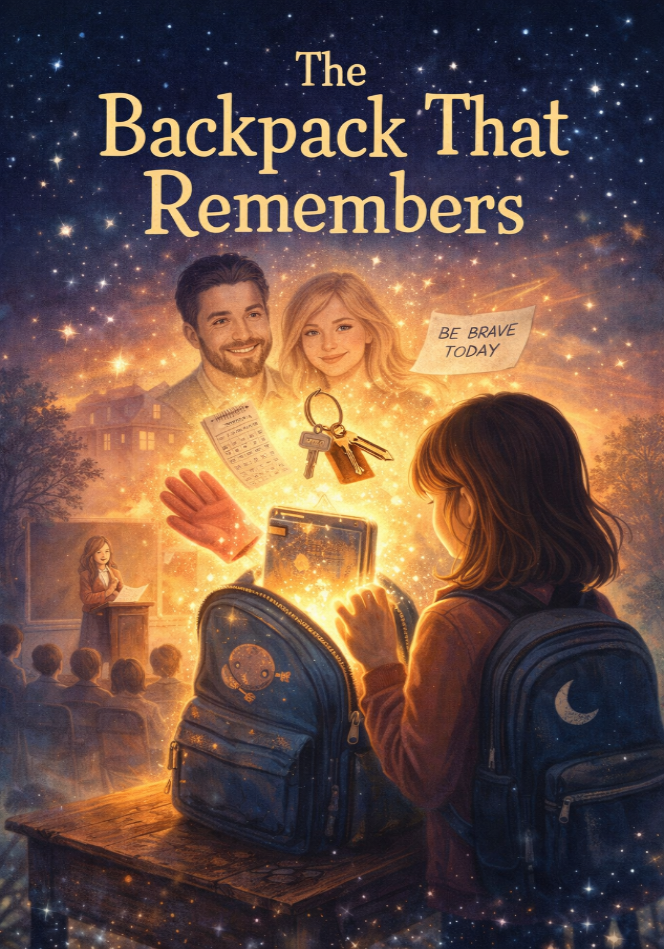
The Backpack That Remembers
The Backpack That Remembers

The backpack was navy blue with a broken zipper and a faded astronaut stitched onto the front. It had belonged to Mira since first grade, which meant it smelled faintly of pencil shavings, dust, and the kind of time adults forgot existed. Her mother had offered to replace it many times—there were sales, newer bags with wheels and secret pockets—but Mira always shook her head.
“It still works,” she said, though sometimes it didn’t.
The zipper jammed when it wanted. The strap slipped off her shoulder without warning. And things—important things—went missing inside it all the time.
Pencils. Notes. Once, an entire lunchbox.
Her teachers blamed carelessness. Her mother blamed distraction. Mira blamed herself, mostly. She tried to be more careful, tried to check twice, three times. Still, the backpack swallowed things and refused to give them back.
Until the winter the forgetting became necessary.
It started with small emergencies. One afternoon, Mira was sent to the principal’s office because she couldn’t find her homework. She had done it—she remembered sitting on the floor, tongue caught between her teeth, copying spelling words carefully. But the folder was empty.
She sat outside the office, legs swinging, stomach tight with dread. Her fingers curled around the backpack strap.
“I really did it,” she whispered, unsure why she was talking to the bag. “I just… need it.”
The zipper slid open by itself.
Inside, neatly stacked on top of everything else, was the missing homework. Not crumpled. Not smudged. Warm, as if it had just been written.
Mira stared.
Then the zipper closed.
She didn’t tell anyone. She decided it must have been a mistake, or luck, or her eyes filling in what she wanted to see. Children are very good at explaining away miracles when adults have taught them not to trust them.
But the backpack kept remembering.
When she forgot her gloves on the coldest day of the year, her hands aching and red, she reached inside and found them folded together, still smelling like laundry soap.
When she blanked during a math test, panic buzzing in her ears, she felt something poke her side. She reached in and found a scrap of paper—not answers, just a small drawing of a number line, something she’d practiced weeks ago and forgotten she knew. It was enough.
The backpack never gave her things she didn’t already have. It didn’t solve problems for her. It only returned what had been lost—when she truly needed it.
The winter grew heavier.
Mira’s father had moved out in the fall, taking his books and his voice and the way he used to knock twice before entering her room. He promised visits. He promised calls. Promises, Mira learned, were easy to pack and easier to forget.
Her mother worked longer hours. Dinners became quiet affairs eaten in front of the television. The house felt larger, echoing with absence.
Mira began forgetting bigger things.
She forgot the sound of her father laughing. She forgot how the house felt before it learned to be hollow. She forgot to raise her hand in class. Forgot to tell her mother when she was scared.
The backpack grew heavier.
One night, after a bad dream she couldn’t remember but couldn’t shake, Mira sat on her bed and opened it. Inside were things she hadn’t put there in months: a cracked marble her father had given her, a ticket stub from a zoo trip, a note in her mother’s handwriting that said Be brave today. The backpack had been keeping them safe.
“Why?” Mira asked.
The backpack did not answer, but it didn’t need to. It had never been about memory alone. It was about timing.
The real test came in spring.
Mira was chosen to read at the school assembly—a short piece, nothing difficult, but the thought of standing alone on stage made her chest feel too small. The night before, she practiced until the words blurred. By morning, they were gone.
Completely gone.
She stood backstage while her teacher whispered encouragement, while parents rustled programs in the audience. Mira clutched the backpack, heart hammering.
“I can’t,” she thought. “I really can’t.”
The zipper opened.
Inside was not the paper she’d practiced from. Instead, there was something else: a folded drawing she had made years ago, of herself standing tall, stick-figure arms stretched wide, a speech bubble that said I can do this.
She laughed, a small surprised sound. Her fear loosened its grip.
Mira stepped onto the stage.
She didn’t read perfectly. She stumbled once, corrected herself, kept going. The audience applauded. Her teacher beamed. Mira felt something click into place inside her—not confidence exactly, but trust.
That summer, the backpack began to empty.
Slowly, deliberately, it returned everything it had been holding. Not all at once, not in dramatic bursts. Just enough, when needed. By the time school ended, it felt lighter, almost ordinary.
One afternoon, Mira tried to make it perform on purpose. She pretended to forget her keys, waited, checked.
Nothing.
She smiled. That was how she knew.
The backpack wasn’t magic in the way stories made magic sound. It didn’t exist to amaze or to fix. It existed to carry what was too much to hold all the time—until the child was ready.
By the next year, the zipper worked again. The astronaut patch peeled a little more at the edges. Mira didn’t need the backpack to remember for her anymore.
But sometimes, when she was tired or overwhelmed, she thought she felt it shift on her back—adjusting itself, quietly making room.
Just in case.
And Mira understood then—some things are not meant to be carried forever. They are meant to be held gently, returned when needed, and released once they have done their work.
The backpack grew lighter, not emptier. Each returned memory left behind courage, kindness, and quiet strength—proof that what truly belongs to us never disappears, it simply waits for the right moment to return.