Library

 Profile
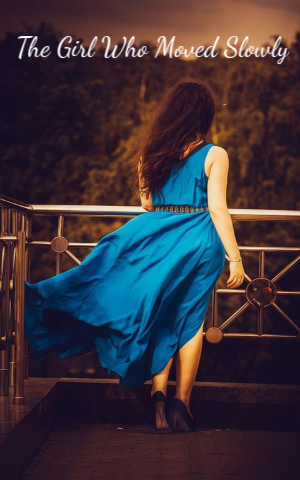
The Girl Who Moved Slowly
The Girl Who Moved Slowly

When she was a little girl, everyone called her slow.
“She eats too slowly,” they’d chuckle.
“She walks like the world has all the time.”
“She runs as if she’s not running at all.”
But what they couldn’t see was that she was present.
She felt every bite, every breeze, every sound.
She noticed the light dancing on leaves, the softness in silence.
She wasn’t slow—she was in tune.
Yet, the world around her didn't know how to make room for that.
“Write faster,”
“Eat quicker—your cousin’s already done,”
“Maybe we need to get your throat checked.”
That child took it seriously. One day, determined to be faster, she gulped down a full plate of cooked rice and curry without chewing it. The grown-ups praised her for finishing her food quickly. Only to see her throw everything up a few minutes later—it hadn’t even begun to digest.
She got a lesson that day: food isn’t meant to be swallowed like that.
Much later in life, she learned that each bite should be chewed at least 32 times. That the body needs time. That nourishment comes not just from what you eat—but how you eat it.
“Walk faster, you’ll get left behind,”
So she changed.
She taught herself speed, urgency, responses on command.
She stopped pausing to feel.
She moved through life like she was always late, even when she wasn’t.
And in trying to become what the world asked of her,
She forgot who she truly was.
Anxiety crept in.
Restlessness became routine.
Patience felt foreign—like a language she once spoke but hadn’t practiced in years.
She started feeling a constant pull—What if I miss out? What if I'm not enough?
But then, after many seasons of noise,
She met someone who moved with intention.
Not slower, but softer.
He wasn’t in a rush—not with words, not with emotions, not with her.
And something in her began to change too.
It wasn’t instant.
It never is.
But being with him felt like coming home to an older version of herself—the one she had buried to survive.
She picked up calligraphy.
An art of patience and precision.
She began reading again, not to finish a book but to live inside it.
She wrote with pauses, breathed with presence.
And in this rediscovery, she began to unlearn.
Unlearn the urgency.
Unlearn the guilt of resting.
Unlearn the lie that softness is weakness and slowness is failure.
One day, she read an article about the beauty of slowing down in a fast-paced world.
How it helps regulate your nervous system. How it brings you back to yourself.
And she smiled.
How strange, she thought,
That the world tries to rush everyone into the same rhythm—
When some hearts are meant to beat like a poem, not a stopwatch.
She wasn’t meant to keep up.
She was meant to feel.
And in the quiet, she remembered how.