ಲೈಬ್ರರಿ

 ಪ್ರೊಫೈಲ್
Sip, Spill, Repeat
Sip, Spill, Repeat

In our house, tea is never announced. It simply appears—quietly, almost naturally—like something that has always been there. Cups are placed on the table, chairs are adjusted, and people gather without being called.
And then, without warning, something begins.
Not conversations in the usual sense, but a slow unraveling of things people didn’t plan to say.
If someone were to observe our family from a distance, they might think we are just another group of people sitting together in the evening, sharing tea after a long day. But that would be a surface-level misunderstanding.
Because in our house, tea does not create conversations.
It exposes them.
It is during these ordinary, almost repetitive tea sessions that stories slip out—stories that were not meant to be told, memories that were supposed to remain private, and incidents that, at the time they happened, were deeply embarrassing.
The strange thing is, no one ever plans to tell these stories.
They just… happen.
And almost always, they begin the same way.
With someone saying, “Do you remember…”
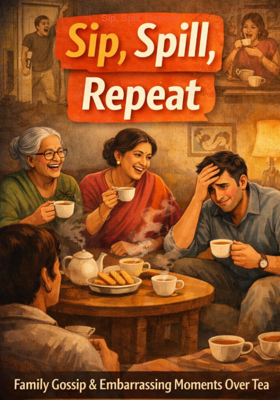
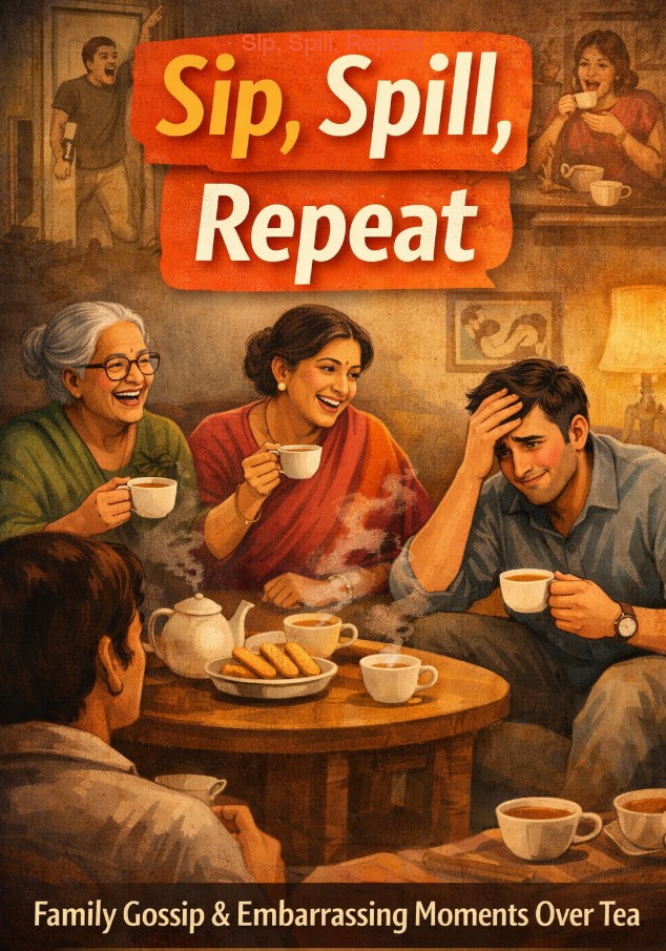
One evening, much like any other, we were sitting together. The tea had just been served. My aunt—who firmly believes that tea is the solution to every possible problem—was already settled comfortably, holding her cup like a person holding authority.
She has a simple philosophy.
If you cannot sleep, drink tea.
If you feel too sleepy, drink tea.
If you have a fever, drink tea.
If you are stressed, confused, or simply bored—drink tea.
Her confidence in this belief is so absolute that no one in the family questions it anymore. We have simply accepted that in her world, tea is not a drink—it is a response.
That evening, she looked at my cousin, who had been unusually quiet.
“Why are you so silent today?” she asked.
“I’m just tired,” he replied.
The answer came too quickly, too neatly. It did not match his usual personality.
Something was off.
My grandmother noticed it too. She did not react immediately. Instead, she took a slow sip of tea and watched him carefully, the way only someone with years of experience in observing people can.
Then she said, very calmly,
“Tired… or avoiding something?”
That was enough.
The atmosphere changed.
No one spoke for a few seconds, but everyone was listening.
My cousin laughed—short, forced.
“What would I be avoiding?”
It was a mistake.
Because in families, asking that question almost guarantees that the answer will be revealed.
My grandmother placed her cup down and said,
“Should I tell them, or will you?”
And just like that, the evening shifted from casual to dangerous.
A few days earlier, my cousin had gone to a small family function—nothing too formal, just a gathering of relatives and acquaintances. The kind of event where people spend more time observing each other than actually talking.
He had decided, for reasons unknown, that this was the perfect place to appear confident.
He greeted people loudly, inserted himself into conversations, laughed at jokes slightly louder than necessary. It was noticeable, but not yet problematic.
Then came the moment.
He went to use the washroom.
At first, everything was normal. But when he tried to leave, the door did not open.
He adjusted the handle.
Nothing.
He tried again.
Still nothing.
At this point, there are usually two types of reactions—panic or denial.
He chose denial.
For a few minutes, he convinced himself that the door would open if he remained calm. But as time passed, calm turned into discomfort, and discomfort slowly turned into panic.
Outside, people began to notice.
There was knocking.
“Is someone inside?”
“Why isn’t the door opening?”
Inside, he stayed completely silent.
Not because he had a strategy—but because he didn’t know what to say without making the situation worse.
Minutes stretched.
The knocking became louder.
Suggestions started.
“Maybe the lock is broken.”
“Call someone.”
“Should we break it?”
Inside, he stood there, fully aware that every passing minute was increasing the scale of what would eventually become a story.
When the door was finally forced open, after what felt like far too long, he stepped out.
There are moments in life when you can feel your dignity physically leave you.
This was one of them.
No one said anything immediately.
And that silence—that brief, polite silence—was worse than any laughter could have been.
Back in our living room, as this story unfolded, my cousin tried to interrupt.
“That’s not exactly how it happened—”
But it didn’t matter anymore.
The story had already been claimed by the family.
And once a story becomes family property, accuracy is no longer the priority. Impact is.
The room filled with laughter—not explosive, but steady, knowing, layered with recognition.
Because everyone understood.
Not the situation itself, but the feeling.
The feeling of being stuck—literally or otherwise—with no graceful way out.
Trying to recover, my cousin made a mistake.
“At least I didn’t embarrass myself in front of guests,” he said.
It was a weak attempt at deflection.
And it failed immediately.
My aunt looked up.
“Really?” she said.
There was a pause.
Then my grandmother smiled.
“Oh, there are many stories,” she said.
And just like that, the focus shifted.
This time, the story was about my aunt.
The same person who believed tea could fix everything.
It happened during a small gathering at our house. Guests had come over, and as expected, tea was being served.
In the middle of managing multiple things at once—conversations, snacks, instructions—she made a simple mistake.
She added salt instead of sugar to one cup.
She didn’t notice.
The tea was served.
The guest took a sip.
And then came the moment that defines true, real-life embarrassment—not loud, not dramatic, but painfully subtle.
He paused.
Just slightly.
Then he looked up and said,
“This tastes… different.”
Not bad.
Not wrong.
Just… different.
That one word carried everything.
The realization hit slowly.
Not instantly, not dramatically—but in a quiet, sinking way.
She took the cup back, tasted it, and for a second, said nothing.
Then she laughed.
A controlled, composed laugh.
The kind people use when they are trying to minimize damage.
But the room had already understood.
And once again, the story was sealed into memory.
At this point, something interesting happened.
No one was trying to hide anything anymore.
It was as if one story had given permission for another.
And then another.
Someone mentioned how my father once waved back at a stranger for a full minute, thinking he was being greeted—only to realize the person was actually waving at someone behind him.
Someone else brought up the time a relative confidently used the wrong name for a guest throughout an entire evening—and only realized it at the end.
Each story was small.
Individually, they were insignificant.
But together, they created something else.
A pattern.
A quiet understanding that embarrassment is not an exception in life—it is a shared experience.
As the evening continued, the tea grew cold.
But no one noticed.
Because by then, the purpose of tea had already been fulfilled.
It had done what it always does in our house.
It had brought people together—not just physically, but emotionally.
It had created a space where people could laugh at things that once made them uncomfortable.
It had turned private moments into shared ones.
Looking back, it becomes clear that tea, in our family, is not the center of the story.
It is the setting.
The constant presence.
The silent witness.
It does not solve problems.
It does not prevent embarrassment.
If anything, it makes both more visible.
Because when people sit together long enough, with nothing urgent to do and something warm in their hands, they begin to let their guard down.
And when that happens—
Things slip out.
Truths.
Memories.
Stories that were never meant to be told.
And once they are told, they change.
They lose their sharpness.
They become lighter.
They become… shareable.
That is why, in our house, every tea session carries a quiet risk.
Not of conflict.
But of exposure.
Because you never know which small, forgotten, slightly embarrassing moment will suddenly return—
And become everyone’s entertainment.
Not cruelly.
Not intentionally.
But naturally.
Like tea itself.
Served without announcement.
And impossible to refuse.