Library

 Profile
He is Alive
He is Alive

He Is Alive
"The light shines in the darkness, and the darkness has not overcome it." — John 1:5
The city felt smaller that morning, as if the sun itself had shrunk to peer cautiously through the streets. Sofia’s boots clicked on the pavement, each step echoing the pulse of a city that had grown used to absence. For two years, Abraham had been gone — taken in the chaos of war, held far from home in Gaza, leaving her world hollowed and measured by the empty space beside her.
She held a folded photograph of him in her jacket pocket. The edges were soft from years of touch, from tracing his smile when she could not sleep, from whispering to it the small and ridiculous things she did alone: the way she burned the toast, the basil that would never grow straight, the quiet victories of an ordinary life carried without him.
When the first ambulance arrived at the government compound that morning, the crowd murmured in low, expectant tones. Neighbors she recognized — the baker with flour dust still on her apron, the teenage boy who had grown taller than she remembered, the gray-haired man who always wore a scarf — all stood silent, united in a moment that carried grief and relief together.
Sofia clutched her photograph. Her pulse raced in the lull between reality and memory, a beat that felt both too long and too short. She remembered Abraham adjusting his scarf before stepping out two years ago, tucking luck under his chin as if he could carry it like a talisman. He had promised to bring her olives from the market, his laugh trailing behind him like a kite in the wind.
The medical personnel moved with practiced gentleness, carefully lifting each covered stretcher from the ambulances. Names were read aloud, each syllable precise and weighted, like stones dropped into still water. “Abraham?” a voice called. She stepped forward, trembling, and answered. A technician nodded and motioned her closer.
Inside the hall, she saw the shroud. Her stomach dropped, a hollow that the years had not filled. Yet when she reached out, touching the cloth, something shifted. It was not the physical presence of him, but the space around her that seemed to hold a pulse, a quiet insistence that life moves even in absence.
The official verification was over quickly. “It matches,” the technician said. The words were simple, but Sofia felt them resonate like a bell in a cathedral. She bowed her head and let tears flow freely, not only for the body returned, but for the two years that had passed, for the silence that had been her companion, for the small, unspoken prayers she had whispered into the dark.
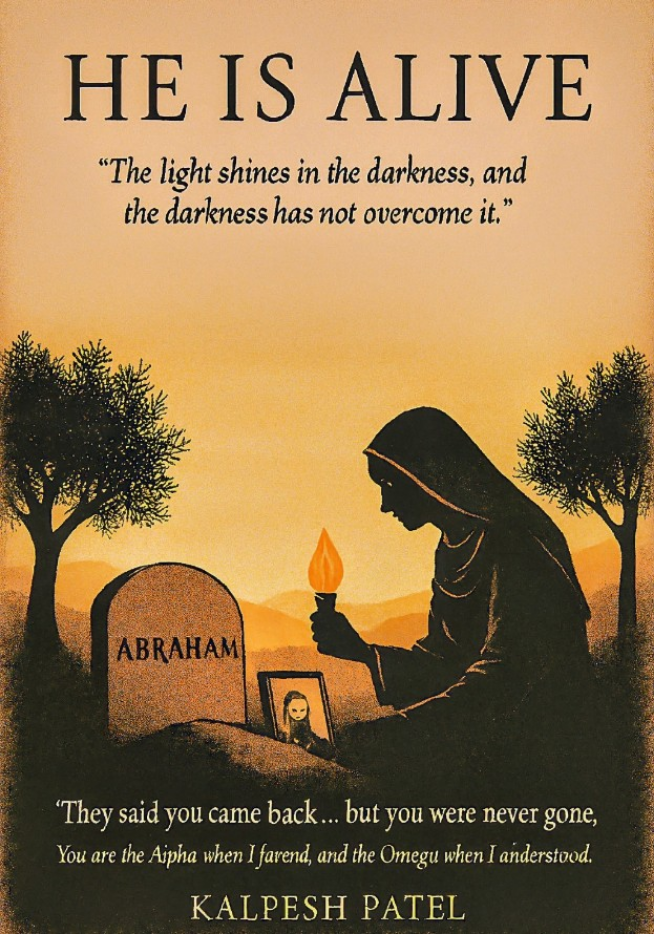
The procession to the cemetery was quiet. Neighbors flanked her, strangers united by grief, by the fragile and unwavering human thread of hope. The earth lay waiting, and Sofia stepped forward with a candle she had carried from home, its flame small but steadfast. She placed it beside the photograph she had brought, watching its glow dance across his face.
In that moment, she whispered aloud, almost to herself, almost to the city:
> “They said they brought you back… but you were never gone.”
And then, the words of a verse her mother had taught her in childhood rose into her mind, clear and steady:
"The light shines in the darkness, and the darkness has not overcome it."
Sofia closed her eyes. In the hush of the cemetery, the candlelight flickered but did not die. She could feel Abraham — not in the body alone, which was now laid before her, nor in memory alone, which had carried her through two long years — but as a living pulse that threaded through the world. The light, she realized, was not only in the flame, but in the resilience of her heart, in the continuity of love, in the quiet endurance of faith.
The wind lifted the edges of the shroud slightly, carrying a faint scent of jasmine and dust, a reminder of life’s persistence. She traced the corners of the photograph with her fingers and smiled softly. In that moment, all the sorrow and fear, all the waiting and doubt, coalesced into a singular truth.
He is alive.
Not in the way the world defines life, perhaps — not in laughter or in touch or in a daily routine — but alive in the way God’s light threads through darkness, in the way love refuses to be confined by absence, in the way memory and faith converge to create presence.
Sofia knelt, placing the candle on the ground beside the shroud. The city’s noises — sirens, voices, distant engines — seemed to fall away, leaving only the soft murmur of the wind through the olive trees. She spoke again, more firmly this time, her voice steady with certainty:
> “You are the Alpha when I feared, and the Omega when I understood. You are the light that no darkness can overcome.”
She did not look for answers, nor for miracles that could be measured. Instead, she breathed in the cool air, the scent of earth and flame, and felt a quiet, living presence, stretching across the divide of years, across the walls of war, across the distance between fear and hope.
Later, at home, she placed the photograph on the table, beside the cup of tea she had made and left to cool. The candle’s flicker had faded, but the warmth remained. She touched the photograph lightly and whispered one final time:
> “He is alive.”
Outside, the city moved on — small errands, distant conversations, lives unfolding in the normal, relentless rhythm of human existence. But inside Sofia, and in the silent spaces of hearts like hers across the city, a truth endured: beginnings and endings are not opposites, only points on the same thread. From Alpha to Omega, from absence to presence, from darkness to light — life persists, unbroken, alive.
And somewhere in the hush of the room, she felt it clearly: Abraham had returned. Not merely in body, not only in memory, but in the living, unyielding light that darkness can never overcome.