Library

 Profile
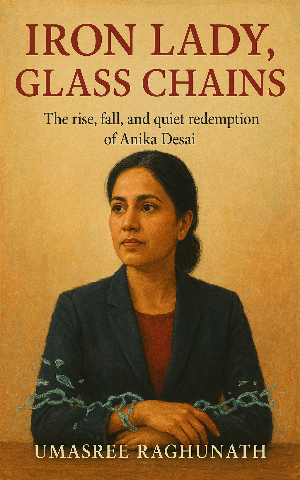
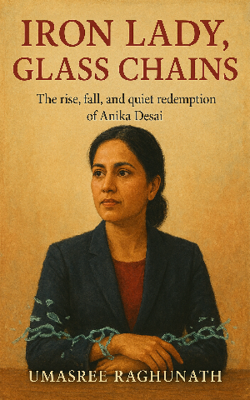
Paru Tales - “Iron Lady, Glass Chains”
Paru Tales - “Iron Lady, Glass Chains”

The rise, fall, and quiet redemption of Anika Desai – a woman who once ruled India's banking corridors and then chose to redefine success.
Anika Desai didn't grow up believing she'd wear saris that cost more than her childhood home or sit across the table from finance ministers and billionaires. She was a girl who outran the taboos of the society
She was born in a modest home in Pune. Her father, a schoolteacher with ink-stained fingers. Her mother, a homemaker who stitched blouses to afford Anika's tuition at Symbiosis. Anika was brilliant, hungry, and fiercely focused.
"You don't belong in a bank boardroom," her uncle once said. "I don't belong in your version of the world," she replied.
She topped her MBA class. Landed at a fledgling private bank. And in less than a decade, she was headlining finance conferences where she was the only woman in a sea of grey suits.
Praised by the press and media as the Queen of Corporate India, by 39, she was a deputy MD. By 44, Managing Director & CEO.
Under her leadership, the bank doubled its size, digitized faster than any rival, and cracked deals that made headlines. She was lauded. Interviewed. Worshipped.
"You're India's Iron Lady," a journalist once said. "No," she replied, smiling. "I'm just a woman who never blinked when a door slammed shut."
She was awarded the Padma Bhushan, listed in Fortune's Most Powerful Women, and became the poster face of Indian ambition. Behind her, though, a quiet unease was growing.
Whispers began, about her husband's deals, about conflict of interest, about personal relationships entangled with corporate power. And the whisper network slowly grew without her noticing it with the red flags on time.
"Ma'am is it true your husband's company received a loan from a group we funded?" a compliance officer asked, quietly, respectfully.
"Stick to your role," she said, her voice colder than the vaults downstairs.
She wasn't guilty, not in her eyes. She had worked hard, made tough calls, and carried the weight of a man's world on her shoulders.
"Men take deals over golf," she once told a colleague. "When a woman does the same, it's unethical?" But perception in the boardroom is a currency far more volatile than the rupee.
The media didn't wait. Investigations followed. She was asked to step down. Sudden fall from grace felt heavy on her already tired shoulders.
"I built this bank," she whispered in her lawyer's office. "And now you must save yourself." Her lawyer cautioned.
Her office nameplate was removed. Her LinkedIn flooded with "support" messages that barely masked curiosity. The same journalists who called her "trailblazer" now asked if she was a "cautionary tale."
Her husband went silent.
Her daughter stopped going to college, not because she was ashamed, but because she was angry. "You gave your life to that place, Amma. And they walked away the moment smoke rose."
Anika sat alone in her balcony, the city skyline blinking indifferently back at her.
She withdrew from the world with the reckoning. Somewhere, she knew that she was wronged. By her own. She had no choice than to preserve the dignity of her family. Even if it means, at the cost of her career she made with so much sacrifice, and hard work. She decided to step down from everything around her. She went silent and avoided people. Just silently cooperated with the investigators and did everything possible to accommodate the compliance requirements.
Morning chai. Afternoon news. Long walks where no one recognized her anymore. She avoided malls, airports, even WhatsApp groups. Her mind replayed every decision.
Did she ignore warning signs? Did ambition cloud judgment?
Her daughter, Maya, was her only anchor. "You've given enough to the world, Amma. Time to give to yourself."
"What do I have left?" she asked.
"You. That's enough." Her daughter assured her
Anika started her journey of redemption in silence. Mistakes happen. Grave ones, that put the last nail in the coffin even before you are dead. However, it is within you to be strong, face the storm, not lose the smile and try to rebuild everything, even if it means you must start from the scratch again!
She started small.
Guest lectures in Tier 2 colleges. Free mentoring for rural women entrepreneurs. Consulting small cooperatives on ethical lending. No media. No stage lights. No awards. No press meets or shining dashboards and data, metrics, numbers that mattered.
Just chai in paper cups, chalk dust on her fingertips, and the peace of purpose.
A women's self-help group named their new microfinance unit after her: "Anika Sakti Nidhi."
She cried for the first time in years. "I had forgotten what it felt like to be useful without being powerful."
She was not aware that there is going to be an unexpected full circle coming up.
Three years later, an old friend now heading a fintech firm called her. "Join our board, Anika. Not for the world. For the next generation of women who need to see what endurance looks like."
She agreed. Not with the hunger of a conqueror, but the calm of a survivor.
At 58, Anika Desai lives in a modest penthouse in Pune with her books, her memories, and her orchid plants with a quite inner power.
She wears FabIndia kurtas unlike her old designer cotton sarees, that she rarely repeated to wear, hosts young interns for mentoring Sundays. Walks every evening holding Maya's baby, her grandson.
"Do you regret it all?" a journalist once asked during a low-key finance podcast.
"No. I regret not pausing sooner. Not asking myself why I was running so hard. Or not noticing the red flags earlier. It is important to pause and reflect occasionally, when you are running behind everything. Not everything can be in your control. Not everyone can be trusted. These are the lessons I learnt in a hard way!"
"Would you still call yourself successful?" He asked
She looked into the camera.
"Yes. Because success isn't what the world writes about you. It's how quietly you sleep at night." And Anika finally sleeps. Deeply. Peacefully.
She rose like iron, cracked like glass, and rebuilt herself from both, stronger, wiser, and softer. This is not a fall from grace. It is a walk towards her own grace!