Library

 Profile

The Silver River
The Silver River

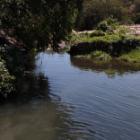
Mei Ling lived in a small riverside town in southern China. The river ran quietly past her home, its surface reflecting the sky in shifting shades of blue and gold. From childhood, she had been drawn to the river, fascinated by its silent persistence. It moved through obstacles effortlessly, bending around stones, swallowing fallen leaves, yet never stopping, never losing its rhythm. She often thought of the river as a mirror of life itself: full of mystery, movement, and inevitability.
Mei Ling was a painter. Unlike other artists, she did not create for fame or recognition; she painted to understand the world, to capture what words could not express. Her small studio overlooked the river, and every morning she would sit by the window, brush in hand, observing the dance of light on water. The colors, reflections, and ripples often became the first strokes of her day.
Yet, as time passed, Mei Ling noticed a subtle change in her hand. One morning, after hours of sketching, she realized her right hand felt numb, stiff, as though it belonged to someone else. The brush slipped from her fingers, and the paint spilled onto the floor. At first, she dismissed it, attributing it to fatigue. But days later, the numbness remained, and she struggled to hold even a single brush.
Fear crept in slowly. Painting had been her life, her way of understanding the universe, and now her body seemed to betray her. She watched the river, calm and unyielding, and wondered if her life would continue to flow, or if it would be frozen in place, trapped by her inability to create.
The days that followed were filled with frustration and despair. Mei Ling attempted to use her left hand, but the strokes were awkward, clumsy, lacking the precision she had cultivated over years. Each attempt at painting became a reminder of what she had lost. At night, she lay awake in her small room, listening to the murmur of the river outside, feeling the darkness press against her window. The river, which had once been her inspiration, now seemed to mock her helplessness with its effortless movement.
One evening, in the dim light of her studio, she opened a dusty box containing her grandmother’s letters and journals. She remembered her grandmother’s words from her childhood:
"True art is not in the hand, but in the heart. If you cannot hold the brush, hold the vision. If you cannot paint, see with your soul."
Mei Ling closed her eyes and tried to imagine the river in her mind, not with her eyes, but with her soul. She visualized its curves, its quiet strength, its endless journey. At first, she could see nothing but darkness. But slowly, as she focused, shapes and movements began to emerge in her imagination. She realized that perhaps her struggle was not an end, but a doorway.
Her fear remained, but it was tempered by a new thought: maybe creation was not limited to the physical act of painting. Perhaps it could flow directly from the mind, unbound by the limitations of her body.
Determined to continue, Mei Ling began experimenting. She used her left hand with no expectation, letting it move freely across the canvas. The first few paintings were chaotic, fragmented, unrecognizable. But something about their raw energy captured a truth she had never reached before.
Encouraged, she took a bold step—she blindfolded herself while painting. Without sight, her mind became her guide, her imagination her brush. Surprisingly, her work flourished. Shapes and colors emerged from memory, from emotion, from the deep observation of life she had cultivated for years. Each stroke was unplanned yet intentional, as if the river itself had taught her how to flow without resistance.
Mei Ling discovered a hidden strength: limitations had awakened a part of her she had never known. Her hand no longer dictated her art; her heart and mind did. Through struggle, she realized that creativity was not a matter of perfection, but of authenticity, emotion, and connection.
As months passed, Mei Ling’s work transformed. Her paintings became more expressive than ever. Colors swirled with movement, emotion, and depth. People noticed the energy in her work, drawn not just to what they saw, but to the feelings it evoked. Some who could not see well enough to appreciate detail could still feel her art through her descriptions, her storytelling, her voice.
The river outside remained unchanged, flowing silently, eternal. Mei Ling understood that life was much like the river: persistent, adaptable, and unstoppable. She learned to let go of control, to trust the current, to allow life to guide her. The fear that had once paralyzed her began to dissolve.
With every painting, she explored her own vulnerabilities—fear, uncertainty, hope, and resilience. Each stroke was a meditation, a conversation with herself, and an attempt to capture the beauty of existence as it truly was: imperfect, fleeting, and profound.
Eventually, Mei Ling came to a profound realization: her disability did not define her. Her purpose was not the perfect control of a brush, but the expression of her inner vision. She began to paint with joy, surrendering to her limitations and embracing them as teachers.
She also began mentoring young artists in her town. She encouraged them to explore imperfections, to find creativity in unexpected places. She shared her philosophy:
"Art is not about mastery of technique; it is about mastery of perception, courage, and honesty. Even if your hands fail, your soul can create."
Her life became a quiet example of resilience and inner strength. The small riverside town, which had once seemed limiting, became a place of infinite possibility, mirroring the river that flowed endlessly beside her home.
Years later, Mei Ling’s work reached far beyond her town. People from across China came to see her paintings, to hear her speak about creativity, struggle, and acceptance. Many were inspired by her courage, finding hope for their own challenges in her story.
Mei Ling had discovered that true strength lies not in avoiding difficulties, but in responding to them with awareness and purpose. Darkness had not ended her life—it had revealed its deeper currents, showing her the path to growth and fulfillment.
Even in old age, Mei Ling continued to paint by touch, memory, and intuition. The river outside remained constant, flowing silently, as if echoing her journey: persistent, patient, and alive.
She understood at last that life is like the river: it moves forward regardless of obstacles, carrying those who trust in its flow. Limitations do not confine the spirit; they illuminate it. In the silence of her studio, surrounded by colors, memories, and the eternal river, Mei Ling found peace. And in that peace, she found her light in the darkness.
Looking back, Mei Ling realized that her struggle had been a gift. Her disability had forced her to see beyond appearances, to rely on inner vision, to cultivate patience, resilience, and imagination. The world she created with her paintings was richer than anything she could have painted with perfect hands.
She often returned to the riverbank, standing barefoot in the cool water, letting it flow over her feet. She smiled at the reflection of the sun, not with her eyes, but with her heart. Each ripple reminded her of life’s impermanence and beauty, each current of the river a lesson in surrender and perseverance.
Mei Ling’s story, carried through her paintings and teachings, became a quiet inspiration for generations. People who faced loss, fear, or limitation found courage in her life. They learned that even when the path seems blocked, even when darkness surrounds, the river of life continues to flow, and within that flow, one can always find light, purpose, and meaning.
The river never stopped. It did not pause to judge, it did not grieve or celebrate; it simply flowed. Mei Ling had once feared the limitations of her hands, but the river taught her patience. She had once thought her creativity depended on physical perfection, but the river taught her adaptability. She had once wondered if her life had purpose, but the river taught her continuity.
Mei Ling’s legacy was simple yet profound: courage is not absence of fear, strength is not absence of struggle, and art is not absence of imperfection. Life, like the river, moves forward. Darkness may come, but it carries the possibility of unseen light, guiding those who choose to look inward.
And so, in the quiet riverside town, Mei Ling continued to live, to create, to inspire. Her hand may have faltered, but her vision never did. Her river never stopped, and neither did her spirit.