Library

 Profile
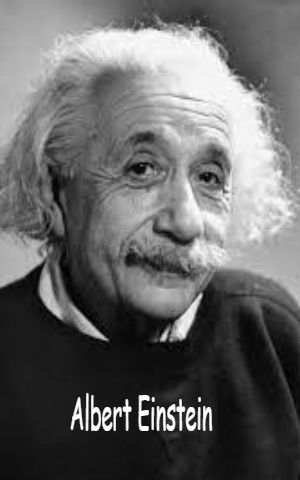
The Albert Einstein Short Story
The Albert Einstein Short Story

Certainly, Albert Einstein's story is quite fascinating. He was born on March 14, 1879, in Ulm, Germany. He showed early signs of curiosity and intelligence, but he didn't excel in traditional schooling methods. He struggled with authority and rote memorization, which sometimes led to clashes with his teachers.
Einstein's breakthrough moment came when he was 16, and he began to think deeply about the nature of light and space. He wondered what it would be like to ride on a beam of light, and this thought experiment eventually led him to develop his special theory of relativity. In 1905, at the age of 26, he published four groundbreaking papers that revolutionized physics.
His most famous equation, E=mc², emerged from his theory of relativity, which showed that energy and mass are interchangeable. This concept had profound implications for nuclear physics and laid the foundation for the development of atomic energy.
Einstein's theories challenged traditional notions of space, time, and gravity. His general theory of relativity, published in 1915, expanded his earlier work and described gravity as the curvature of spacetime caused by mass and energy. This theory predicted phenomena such as gravitational time dilation and the bending of light around massive objects.
Einstein's work not only reshaped physics but also had broader philosophical and cultural implications. His ideas influenced art, literature, and even the way people thought about reality itself. He became an international celebrity and was awarded the Nobel Prize in Physics in 1921 for his discovery of the photoelectric effect, which helped confirm the wave-particle duality of light.
However, Einstein's life was not without challenges. He was a pacifist and a vocal advocate for peace, but he became disillusioned by the rise of militarism and nationalism in Europe. He left Germany due to the Nazi regime's anti-Semitic policies and settled in the United States in 1933. He took a position at the Institute for Advanced Study in Princeton, New Jersey, where he continued his research and became a prominent figure in the scientific community.
Einstein spent the later part of his life searching for a unified field theory that could explain all the fundamental forces of nature. However, he was never able to achieve this goal. He passed away on April 18, 1955, at the age of 76.
Albert Einstein's legacy continues to influence science, philosophy, and popular culture. His work reshaped our understanding of the universe and laid the groundwork for many scientific advancements that followed. His name has become synonymous with genius and innovation, making him one of the most iconic figures in history.
Of course, let's delve deeper into Albert Einstein's life story and some additional aspects:
1. Early Life and Education: Albert Einstein was born to Hermann and Pauline Einstein. His father was an engineer and salesman, while his mother was a talented musician. Einstein displayed an early fascination with mechanical and mathematical puzzles. However, his unconventional and rebellious nature sometimes led to clashes with his teachers.
2. Struggles in School: Despite his early interest in learning, Einstein didn't excel in school. He disliked the rigid educational system and often clashed with his teachers, who didn't always appreciate his independent thinking and unconventional ideas. His dislike for rote learning and memorization continued throughout his academic journey.
3. Self-Taught and Independent: Einstein's distaste for formal education led him to explore topics on his own. He read widely and often discussed his ideas with friends and family. This self-directed approach to learning allowed him to develop a unique perspective on various subjects, including mathematics and philosophy.
4. Swiss Patent Office: After graduating from the Swiss Federal Institute of Technology (ETH Zurich), Einstein struggled to find academic employment. He eventually secured a job at the Swiss Patent Office, where he examined patent applications. This job gave him time to think deeply about scientific concepts and conduct his own thought experiments.
5. Annus Mirabilis: In 1905, often referred to as his "Annus Mirabilis" (Miracle Year), Einstein published four groundbreaking papers. These papers covered the photoelectric effect (for which he received the Nobel Prize), Brownian motion, special relativity, and the equivalence of mass and energy. These works fundamentally reshaped physics.
6. General Theory of Relativity: Einstein's special theory of relativity, published in 1905, transformed our understanding of space and time. However, it was his general theory of relativity, published in 1915, that had an even more profound impact. This theory explained gravity as the curvature of spacetime caused by mass and energy, offering a new perspective on the cosmos.
7. Public Figure and Advocacy: Einstein's fame transcended the scientific community. He was recognized as a leading figure in physics, but he also used his platform to advocate for peace, civil rights, and social justice. He was known for his sharp wit, humanitarian values, and commitment to using science for the betterment of humanity.
8. Immigration to the U.S.: With the rise of Nazi Germany, Einstein faced increasing persecution due to his Jewish heritage and his outspoken criticism of the regime. In 1933, he and his wife Elsa moved to the United States, where he accepted a position at the Institute for Advanced Study in Princeton, New Jersey.
9. Later Years and Unification Quest: Despite his efforts, Einstein was unable to reconcile quantum mechanics and general relativity into a single, unified theory. This remained a lifelong pursuit for him, and his work in this area laid the groundwork for future theoretical physicists.
10. Legacy and Impact: Einstein's legacy continues to reverberate in the scientific community and beyond. His ideas laid the foundation for modern physics, influencing everything from space exploration to the development of new technologies. His name is synonymous with genius, innovation, and the pursuit of understanding the fundamental nature of the universe.
Albert Einstein's story is a testament to the power of independent thinking, perseverance in the face of challenges, and the transformative impact of groundbreaking ideas.