Library

 Profile
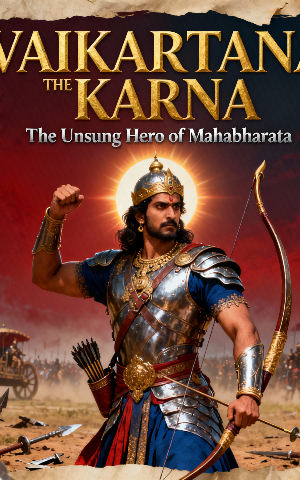
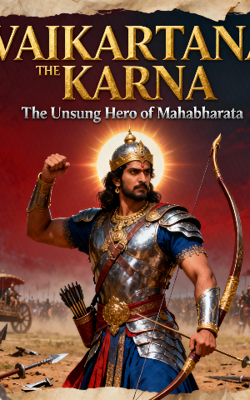
Vaikartna Karna
Vaikartna Karna

PART 1 - ENTERING THE MYTHO....
"Keh do kismat se ki Sangharsh me bada hu mai,
Mushkilo ki chattan todkar sina taan khada hu mai"
Pradip Sir was sharing his shayari in the class. While listening his words I Felt very Motivated. From the very first lecture he was trying to motivate us and for that reason everyone was eagerly waiting for his session. Today the session was going well at the same time our HOD Deshmukh sir arrived and he said rudely "Sir! I have to take the session, so finish your in 5 min." He said "Sir actually I have started just before 5 min. Let me finish the topic in 15 min!" Deshmukh sir said, "I have to start in 5 minutes just wrap up yours fast !" and then Without saying a word Pradip Sir left the class and Deshmukh sir started his session .
Every morning, I would wake up early and start study. My room was my study area, with books scattered all over my desk. I read, solved problems, and made notes, hoping to do well in my exams. But no matter how hard I tried, things didn’t seem to go my way.
Oh sorry! I forgot to introduce myself "Hi I am Pratik a student of banking exams and trying to work harder to pass but unfortunately hadn't found the way out."
One day, his mentor, Mr. Deshmukh, told him, “Pratik, you need to work harder. Your practice is not enough. I don’t think you are putting in the right effort.” Those words hit Pratik like a storm. He felt like all his hard work was not good enough. He started to doubt himself and wondered if he would ever be successful.
Feeling very low, Pratik decided to visit his grandmother, whose house not far from his own. His grandmother, whom he lovingly called Dadi, was a wise and caring woman. She always knew how to make him feel better. As Pratik walked to her house, he tried to push away his worries, but they followed him like shadows.
When he reached Dadi’s house, she welcomed him with a warm hug. “Pratik, my dear,” she said, “come in. You look stressed. What’s wrong?”
Pratik sat down on the soft mat in Dadi’s living room. “Dadi,” he said, “I am so tired. I’ve been studying hard for the banking exams, but Mr. Deshmukh said I’m not doing enough. I feel like all my efforts are wasted. I don’t know if I can keep going.”
Dadi listened carefully. She knew how much Pratik wanted to succeed and how hard he was working. She wanted to help him feel better. With a gentle smile, she began to tell him a story that she hoped would give him the courage to keep going.
“Long ago,” Dadi started, “there was a brave warrior named Karna. Karna lived in a land far away, where people respected him for his strength and skills. But Karna’s life was not easy. Even though he was very talented, he faced many problems.”
Pratik looked curious. “What kind of problems did Karna face, Dadi?”
Dadi continued, “Karna was born to a royal family, but he was raised by a family of charioteers (saarthi). The people around him thought he was not important because of where he came from. They didn’t believe in him, and many times, they treated him unfairly. Despite this, Karna never gave up. He worked hard and became one of the best warriors.”
Pratik listened closely, his eyes wide with interest. “But how did Karna keep going, Dadi? Didn’t he feel sad?”
Dadi nodded. “Yes, Pratik. Karna did feel sad sometimes. He faced many challenges, and people often doubted him. But Karna had a big dream, and he didn’t let anyone stop him. He practiced every day and kept believing in himself. Even when others were mean or when things didn’t go as planned, Karna stayed focused on his goals.”
Pratik was starting to feel a bit better. “So, what happened to Karna in the end?”
Dadi smiled warmly. “Karna’s story is a great lesson. Even though he faced many difficulties, he never gave up. His hard work and determination helped him achieve great things. He became famous for his bravery and skills. His story shows us that no matter how tough things are, if you keep working hard and believe in yourself, you can reach your goals.
Would you really want to listen his complete Story?”
“Long, long ago,” she began, “There was a beautiful young princess named Kunti. Her beauty could stop time; her eyes shine brighter than the stars, and her smile could light up the darkest night. With hair like a waterfall of silk and skin as soft as the morning dew, she is perfection itself. Just one glance from her could melt the coldest heart. She was kind-hearted and virtuous, loved by all in her father’s kingdom. One day, the great sage Durvasa visited her palace. Kunti served him with such dedication that he decided to grant her a boon. (blessings)”
Pratik’s eyes widened with interest. “What kind of boon, Dadi?”
“A very special one,” she continued. “Durvasa gave Kunti a mantra that allowed her to summon any god she desired, and that god would bless her with a child. But Kunti was young and curious. She didn’t fully understand the power of the mantra. One day, she decided to test it. She went to the riverbank, where the golden rays of the sun danced on the water and recited (say again and again) the mantra.”
"यः स्मरन् स देवता, स्मययते तस्य ध्यानेन च।
तस्य वक्षसस स मे वासं स्थायं कुरुते सदा॥"
Meaning:
"The deity(devotee) who is remembered, who is summoned with deep meditation, Shall take residence in the heart of the one who remembers him."
“As she finished chanting,” her grandmother said, lowering her voice to add suspense, “the sky darkened for a moment, and then a brilliant light filled the air. From this light emerged Surya, the Sun God himself. His radiance (light) was so high that Kunti could not keep her eyes open.”
“Was she scared?” Pratik asked.
“At first, yes,” his grandmother replied, “but Surya’s voice was gentle and warm. He told her that she had summoned him with her mantra and that he was there to bless her with a child. Kunti was astonished (Surprised), but she was also filled with a sense of divine love. Surya was not just a god; he was handsome, powerful, and kind. The sun is like a handsome young man, glowing with a bright, golden smile. Its warm light spreads across the sky, making everything look beautiful. Every day, it shines with a charm that makes the world feel special. In that moment, a deep bond was formed between them.”
Pratik’s heart raced. “So, what happened next?”
“Kunti, though she was young, felt an overwhelming affection for Surya,” his grandmother continued, “and Surya, bound by the power of the mantra, bestowed upon her a child. This was no ordinary child, Pratik. He was born with golden armor (covering of metal) and earrings, gifts from Surya himself to
protect the boy throughout his life.”
“However,” she said, her sad voice “the joy of Karna’s birth was overshadowed by fear. Kunti was unmarried, and in those times, an unmarried mother was met with dishonor. She was terrified of what her father and the people of the kingdom would think.”
Pratik frowned, feeling a sense of injustice. “But it wasn’t her fault! She didn’t know this would happen.”
“No, she didn’t,” his grandmother agreed, “but the fear of society was stronger than her love for her newborn child. With a heavy heart, Kunti placed the baby in a small basket, lined it with soft cloth, and set it afloat on the river, praying that someone kind would find him and take care of him.”
Pratik’s eyes filled with tears. “That’s so sad, Dadi. How could she do that?”
His grandmother sighed. “Sometimes, Pratik, people make difficult decisions when they’re scared. Kunti loved her son, but she felt trapped. As she watched the basket going away, she whispered a prayer to Surya, asking him to protect their son.”
“Karna was found by Adhiratha, the charioteer(saarthi) of King Dhritarashtra, and his wife, Radha,” she continued. “They had no children of their own and were overjoyed to find this beautiful baby boy. They raised him as their own, naming him Vasusena, though he would later be known as Karna. But despite their love, Karna grew up always feeling like an outsider, never knowing the truth of his birth.” “Did he ever find out?” Pratik asked, now fully immersed in the story. “Yes, he did,” his grandmother replied, “But it wasn’t until much later, on the eve of the great battle of Kurukshetra. By then, Karna had sworn (swear) his loyalty to Duryodhana, and Kunti revealed the truth to bring him over to the side of his brothers, the Pandavas.” Pratik’s jaw dropped. “He was a Pandava?”
“Yes,” she said, nodding slowly. “Karna was the eldest son of Kunti, but he felt betrayed by fate. He had been denied his birthright, scorned for his lowly status, and now, just when he knew the truth, it was too late. His loyalty to Duryodhana was unshakeable, and he refused to betray the man who had stood by him when no one else did.” And finally Dadi said,
“Samaj ki lehron mein, apni khwahishen chhod dete hain.
Kisi aur ke khatir kabhi hum apne aap ko kho dete hain,”
Pratik, “Dadi was his life completely full of tragedy and sadness. Had he never get happy ?
I really felt bad for him “ Now Dadi realized that Pratik want some happy parts of karna’s life and said “Let’s start the love journey of Karna and try to collect some precious moments from his life .”
One day the sun was setting with a golden hue over the garden. Karna wandered through the lush greenery, lost in his thoughts. He had recently earned his place among the warriors of Hastinapura and was struggling to balance his aspirations with his responsibilities. As he walked, he noticed a figure moving gracefully among the flowers, her presence almost hidden against the backdrop of nature’s beauty.
Vrushali, the daughter of a Vasudev (A nobleman from Anga) , was known for her beauty and grace. Her dark, flowing hair was adorned with delicate flowers, and her eyes sparkled with the light of the setting sun. As she bent to arrange a bouquet of roses, Karna couldn’t help but be impressed by her loveliness. Summoning his courage, Karna approached her, his heart pounding. “Good evening,” he said, trying to sound casual.
Vrushali looked up, her eyes meeting his with a warm, welcoming gaze. “Good evening,” she replied with a gentle smile. “I’m Vrushali. It’s a pleasure to meet you.”
Karna, slightly embarrassed but captivated, introduced himself. “I’m Karna. I’ve heard much about the beauty of this garden, but I must say, it is not that much better in comparison to you.”
Vrushali laughed softly, a sound that seemed to mold perfectly with the garden’s ambiance. “You’re kind. The garden does have its charm, but it’s always more delightful when shared.”
Their conversation continued. They talked about their interests, dreams, and the simple joys of life. Karna found himself opening in a way he had never done before. He spoke of his ambitions and the struggles he faced, while Vrushali listened with genuine interest. Her empathy and understanding were like a balm to Karna’s weary soul.
As the sky darkened and the first stars appeared, Karna and Vrushali had to go with a promise to meet again. Karna walked home that evening with a lighter heart, feeling as though he had discovered a new source of inspiration.
“Gulabon se bhi zyada khilta hai uska chehra,
Uski muskurahat se chamakta hai sheher saara.
Har ada mein hai jiski ek najakat ki baat,
Dekhte hi lage jaise thaamlu iska haat.”
Days turned into weeks, and Karna and Vrushali’s friendship blossomed into a deep, affectionate relationship. They spent many hours together, exploring the city, discussing their hopes, and sharing their dreams. Their bond grew stronger with each passing day, characterized by mutual respect and profound understanding.
Once the atmosphere was very romantic, it was in Karna’s heart that’s romantic today. By holding her hand he began ,“Vrushali,” his voice filled with emotion, “you’ve brought a sense of calm into my life that I didn’t know I needed. I’ve always been consumed by my ambitions, but with you, I’ve found something more precious—peace and love. You are the one without whom I feel incomplete”
Vrushali looked at him with eyes full of affection. “Karna, you’ve always had a strong spirit, and I admire that about you. But remember, even the strongest hearts need a sanctuary, a place to find solace. I’m here for you, to support and stand by you.”
Their conversation continued as they shared their fears and aspirations. Karna felt a sense of liberation in expressing his innermost thoughts. Vrushali’s presence was a source of comfort, a reminder that he was not alone in his struggles.
Their love was not just about romantic gestures but also about the quiet moments of understanding and support. Vrushali’s belief in Karna’s potential and her support became his driving force in turbulent (troublesome) times. Her gentle words and encouraging smile helped him face the challenges that lay ahead.
As the Kurukshetra War loomed closer, Karna found himself disturbed. Vrushali asked him What happened you looked so stressed? and Karna continued "Do I really deserve this, Vrushali? He asked her that day, "I know I made so many mistakes in my life, but do I deserve this kind of punishment? Is it the punishment for my silence in the court when everybody disrobed Drupadi and her honor? Tear rolled from his eyes, and he shivered in her arms, "Is it the reason I have to choose between my friend and brothers in the battlefield? Tell me Vrushali, what I must do now? He grasped her shoulders and shook her eagerly, waiting for her answer.
Vrushali held him close, her voice soothing. “Dear Radheya , I understand the weight of your burden. But remember, love is not just about easy choices; it’s about standing by each other through the hardest times. I am here with you, supporting you, no matter what.”
As the war began, Vrushali remained a pillar of strength for Karna. Despite the chaos and conflict, her love and support were constant. She wrote letters of encouragement and awaited his return with hope and patience, knowing the cost of war and the toll it took on her beloved.
Karna’s final moments in battle were marked by a profound sense of longing and unfulfilled love. He fought bravely, but his thoughts often turned to Vrushali and the life they had shared. Her love and support had been his guiding light, and as he faced his destiny, he carried her memory with him.
Now Pratik has a beautiful smiling on his face and now Dadi realized that he was completely involved so she said for fun, “Ok then we’ll stop the story now.” “No dadi! its becoming too interesting I want to know more about the Mistakes made by him as he mentioned it to Vrushali ?”
Today Pratik met with Mr. Deshmukh and made him clear that “I can pass the exam as I have the guts suddenly he said “You are the worst student I have ever seen. I challenge you that you could have pass the exam my evil blessings are always with you you don’t “The Aukat” to qualify it.”Pratik smiled and said “Thank you sir I will definitely mark your words in my mind and meet you as soon as I get selected.”
Mr. Deshmukh was very furious this was his first experience. Pratik came to Dadi asked what had happened and asked Dadi ,” Mr. Deshmukh said you had “The Aukat” to qualify the exams is it so ? Dadi, “Don’t worry, Pratik you haven’t hurt as much as Karna !”
It was a calm and peaceful evening, the sun was slowly setting, spreading a golden light across the sky. The rays of the sun touched everything gently, making the palace glow like it was made of gold. Inside the grand hall, the air was filled with the sweet scent of flowers. The walls were covered with colorful banners, and the floor was covered with soft carpets that felt like walking on clouds.
People had gathered in the grand hall, excited and eager to see what was about to happen. They whispered to each other, their voices blending with the soft music that played in the background. The hall was filled with nobles, warriors, and the royal family. All eyes were on the young warrior standing in the center of the room—Karna.
Karna was strong and brave. His body was fit, and his eyes were full of determination. But there was something else in his eyes—a longing, a deep wish to be accepted and respected. You see, Karna was the son of a charioteer, and in those days, people cared a lot about where you came from. Even though Karna had trained hard and become a great warrior, many still looked down on him because of his birth.
Today, Karna was determined to prove himself. He was going to challenge Arjuna, the famous prince known as the best archer. Karna wanted to show that he was just as good, if not better. But as he prepared to show his skills, he could feel the weight of the crowd’s judgment on his shoulders. It was like a heavy stone pressing down on him.
As Karna stepped forward, the hall grew quiet. Everyone was watching him closely, some with curiosity, others with doubt. Karna pulled back his bow, his hands steady and strong. He aimed carefully, his mind focused on the target. But before he could release the arrow, someone in the crowd snickered(teasing laugh). Then, another person laughed. Soon, the hall was filled with the sound of people mocking (yelling) him.
“He’s just a charioteer’s son,” someone said with a sneer.
“Does he really think he can compete with Arjuna?” another voice added, filled with taunt.
Their words were like sharp arrows, killing Karna’s heart. The laughter grew louder, echoing off the walls of the grand hall. Karna’s hands began to shiver slightly. His confidence, which had been so strong, started to fade away. He felt a knot tighten in his stomach, and his heart ached with the sting of their words. It wasn’t just his skills being questioned; it was his very identity.
The hall that had once felt grand and welcoming now seemed cold and hostile (unfriendly) . The mocking voices surrounded Karna, making him feel small and insignificant. He lowered his bow, his shoulders down as he tried to hold back the tears that were threatening to come out. This was not how he had imagined this moment.
But just as Karna was about to lose all hope, a figure stepped out from the shadows and into the light. It was Duryodhana, the eldest prince of the Kauravas. Duryodhana was tall and strong, with a commanding presence. But today, his eyes were filled with something different—kindness and understanding.
Duryodhana had been watching everything from a distance. He had seen the way Karna was treated, and it filled him with anger and sadness. Duryodhana didn’t care about Karna’s birth; he cared about the man he had come to know as a friend. Karna was brave, loyal, and skilled. To Duryodhana, that was all that mattered.
As Duryodhana walked towards Karna, the crowd fell silent. Everyone was watching, wondering what the prince would do. Duryodhana stood before Karna, his face serious but gentle. He placed a hand on Karna’s shoulder, a simple gesture that meant so much. It was a sign of support, of friendship.
“Karna,” Duryodhana said, his voice calm and steady, “You are a great warrior, and your heart is as noble as any prince’s. Don’t let their words hurt you. They do not see what I see. I see a man of honor, a man of courage.”
Duryodhana then did something that shocked everyone. He took off his own golden crown, the symbol of his royal status, and placed it on Karna’s head. The crown was heavy and shining, made of pure gold and designed with jewels. It sparkled in the fading light of the setting sun, casting a warm glow on Karna’s face.
“This crown,” Duryodhana continued, “is not just a symbol of royalty. It is a symbol of my respect and friendship. From this day forward, you are my equal, my brother. I will stand by you, just as you have always stood by me.”
The crowd, which had once been filled with laughter, was now silent. They watched in awe as Duryodhana honored Karna in a way that no one had expected. The golden crown gleamed on Karna’s head, and in that moment, he was not just the son of a charioteer—he was a king in his own right, a warrior who had earned the respect of the future king.
Karna looked at Duryodhana, his eyes filled with tears, not of sadness, but of deep gratitude. He felt the warmth of Duryodhana’s friendship like the sun’s rays on a cold day. It melted away the pain and filled his heart with a new strength.
“Duryodhana,” Karna said, his voice choked with emotion, “You have given me more than just a crown. You have given me honor, respect, and a place in this world. I will always be by your side, no matter what. This crown will always remind me of our bond, our friendship.”
As the last light of day faded away, and the stars began to twinkle in the darkening sky, the grand hall of Hastinapur was filled with a new sense of respect and admiration. The bond between Karna and Duryodhana was something special, something that no one could break.
Outside the palace, the night was calm. The moon rose high in the sky, shining down on the world below, as if blessing the new bond that had been formed. The gentle breeze rustled the leaves of the trees, and the distant sound of a river flowing could be heard in the quiet of the night. Nature seemed to celebrate the friendship between Karna and Duryodhana, a friendship that was pure, strong, and unshakeable.
Dadi said “And so, the story of Karna’s coronation became more than just a tale of a warrior being honored. It became a story of true friendship, of loyalty and respect that went beyond birth and status. It was a reminder that real worth is not in where you come from, but in who you are, and the bonds you build with others”.
Dhool se uthi ek aas, rath ka saarathi bana veer,
Ek yoddha, jisne todi har takleef ki zanjeer.
Sootputra kehkar jisne apmaan ka vish piya,
Wahi Karna tha, jisne mrutyu ko bhi haraya…
Pradip sir shared the lines which made me think about the Karna’s bravery and decided to learn more about from Dadi.
I have read in the topic today that
Karna's journey for mastery in archery was a journey steeped in tragedy and drastic struggle. His first encounter with Guru Drona, the renowned teacher of the Kuru princes, ended in heartbreak. Karna, driven by a strong desire to learn, approached Drona with humility and hope, only to be turned away because of his low birth. The rejection was a bitter reminder of the limitations imposed on him by society, yet Karna did not allow despair to consume him.
In his desperation, Karna went out to Parashurama, the fearsome Brahmin-warrior who was a deep hatred for Kshatriyas. Knowing this, Karna pretended himself as a Brahmin to win Parashurama’s favor. Under his strict rules, Karna's skill in archery flourished, and for a moment, it seemed as though his dreams were within reach. But the deceit came at a terrible cost. One day, when Parashurama discovered Karna's true identity, his anger knew no bounds. In his anger, he cursed Karna, dooming him to forget his most crucial knowledge when he would need it most. This curse hung over Karna like a dark cloud, a constant reminder of the price he paid for his ambition.
As Karna's reputation grew, it attracted the attention of Duryodhana, the eldest of the Kauravas. Duryodhana, seeing in Karna a kindred spirit who also fought against the tides of fate, elevated him to the status of a king. This friendship offered Karna the recognition he had long craved, yet it also bound him to a path of inevitable conflict with the Pandavas. Even Bhishma, the grand elder of the Kuru dynasty, saw the greatness within Karna but could not help him escape his tragic destiny. Bhishma’s wisdom and Duryodhana’s loyalty were small comforts in the face of the immense struggles that Karna endured.”
I asked Dadi about the war and then she started
“अनूठा कर्ण का रण आज होगा,
जगत को काल-दर्शन आज होगा ।
प्रलय का भीम नर्तन आज होगा,
वियद्व्यापी विवर्तन आज होगा ।- (Rashmirathi)
The Epic Battle: Karna vs. Arjuna
The sky over the battlefield of Kurukshetra was filled with smoke and dust. The ground was covered with the fallen soldiers of the Pandavas and Kauravas. The two armies clashed (fought) with each other, but in the middle of it all, two great warriors stood facing each other—Karna and Arjuna.
Karna was a brave and skilled warrior. He was born to Kunti, the mother of the Pandavas, but was abandoned (left) at birth and raised by a charioteer. Despite his tough childhood, Karna became a powerful king and a loyal friend to Duryodhana, the leader of the Kauravas. He had a special armor given by the sun god, Surya, that made him nearly invincible (unbeatable), but he had given it away in an act of generosity (kindness), leaving him more vulnerable (weak) than ever before.
Arjuna, on the other hand, was the third of the Pandava brothers and was known for his unmatched (unbeatable) skills in archery. He was a student of Dronacharya and had the powerful bow, Gandiva. Arjuna was guided by Krishna, who was not only his charioteer but also his greatest friend and advisor. Arjuna’s heart was full of emotions—respect for Karna’s strength, anger for the wrongs done by the Kauravas, and sadness for the battle they were about to fight.
As the sun began to set, casting long shadows over the battlefield, the sound of conch shells echoed (sounded), signaling the start of the duel. Karna and Arjuna, with eyes locked on each other, approached in their chariots.
Krishna, calm and wise, spoke to Arjuna, “This is the moment we’ve prepared for. Remember, this fight isn’t just for you—it’s for dharma (justice), for justice. Don’t let your feelings stop you from doing what’s right.”
Arjuna nodded, his mind focused on the battle. His heart was heavy, knowing he was about to fight someone who was, in truth, his own brother, though neither had grown up knowing the other.
Karna, standing tall in his chariot, gripped his bow, Vijaya. His charioteer, Shalya, guided the horses skillfully. Karna’s mind was filled with thoughts of his difficult life, the insults he had faced, and his loyalty to Duryodhana. He knew that Arjuna was his brother, but today, he was his enemy.
With a loud cry, both warriors released their first arrows. The arrows flew through the air and clashed (hit), shattering (breaking) into pieces. The sky seemed to light up as they continued to exchange arrows, each one more powerful than the last. Karna’s arrows were as strong as thunderbolts, while Arjuna’s were as fast as lightning. The ground shook under the force of their attacks, and the soldiers stopped fighting to watch the epic duel.
Karna used the Bhargavastra, a weapon so powerful it could destroy entire armies. The sky darkened, and it seemed as though the world would end. But Arjuna, guided by Krishna, called upon the Aindraastra, a divine (godly) weapon given by Indra, the king of gods. The two weapons met in the air with a deafening (loud) explosion, and the energy released knocked down everything around them.
Krishna, seeing the battle could not be won by strength alone, told Arjuna to use the Anjalikaastra, a weapon meant to counter (stop) Karna’s power. Arjuna was about to release the weapon when something unexpected happened—Karna’s chariot wheel got stuck in the mud. The chariot tilted (leaned), throwing Karna off balance. He jumped down to lift the wheel, using all his strength to free it from the earth.
“Arjuna, now is the time!” Krishna urged, his voice serious. “Strike (hit) him now, for if you wait, the moment will pass, and with it, the chance to restore justice.”
Arjuna hesitated (paused). He saw Karna struggling with the wheel, a proud warrior now caught in a moment of weakness. The rules of war, the dharma, forbade (did not allow) attacking an unarmed or distracted opponent. But Krishna reminded him of all the times Karna had acted against dharma—his role in humiliating (insulting) Draupadi, his part in Abhimanyu’s death, and his support of Duryodhana’s unjust (unfair) cause.
“Do it, Arjuna. Release the arrow.”
With a heavy heart, Arjuna drew his bow and let the Anjalikaastra fly. The arrow sped through the air, aimed straight at Karna. It struck (hit) Karna in the chest, piercing (breaking) through his armor. Karna staggered (fell), the force of the arrow driving him to his knees. Blood poured from the wound as Karna, the great warrior, fell to the ground.
Even as he lay dying, Karna was calm. He looked up at the sky, his thoughts turning to his mother, Kunti, and the difficult life he had lived—a life full of struggle, honor, and sadness. With his last breath, Karna prayed to the sun god, his divine (godly) father, asking for forgiveness and peace for his soul.
As Karna’s life faded (weakened) away, Arjuna looked at his fallen enemy. He had won the battle, but the victory felt hollow (empty). He had killed a man who was not just a rival (opponent), but his own brother—a brother he had never known. The rivalry (conflict) that had driven them for so long was now over, but it left only sorrow (sadness) in its wake.
Krishna, understanding Arjuna’s pain, placed a hand on his shoulder. “Don’t grieve (cry), Arjuna. Karna was a great warrior, but his choices led him to this end. You did what you had to do, and through this, justice has been served.”
But Arjuna’s heart was heavy. As the sun set, casting a red glow over the battlefield, he knew that this battle, though necessary (needed), would haunt him forever.
The war continued, and the Pandavas would eventually win. But the cost of victory was high. The battle between Karna and Arjuna was more than just a fight; it was a clash of fate, of right and wrong, and of the tragic ties that bound them together. In the end, both warriors were victims of destiny, caught in a battle that was bigger than themselves.
This story of Karna and Arjuna, a part of the great epic Mahabharata, teaches us about the complexity (difficulty) of right and wrong, the pain of tough choices, and the power of fate. Their battle remains a powerful reminder of the cost of war and the deep emotions that drive us as humans.
Pratik Said to Dadi, “Dadi, which is the most favorite part of the Mahabharata and specific to Karna?” Dadi,” Let me share the last conclusion of Karna’s conversation with Shrikrishna it’s the total life of Karna in flashback.”
She started, As the sun dipped low in the sky, painting the battlefield of Kurukshetra with warm, golden light, Karna lay on the ground, tired and hurt. His chariot wheel was stuck deep in the mud, and he was breathing heavily. Even though he was weak, his mind was full of questions that had troubled him for a long time. The chaos of battle had quieted down, and the scene was filled with calmness as Lord Krishna approached with a peaceful presence.
Karna’s Questions and Krishna’s Answers
Karna, despite his pain, gathered his last bit of strength to speak to Krishna.
Karna: “O Krishna, you always teach that we should follow the path of dharma (righteousness). But you told Arjuna to kill me when I was unarmed. Was that really following dharma?”
Krishna sat beside Karna with a gentle smile and a calm demeanor. His presence seemed to bring peace to the chaos around them.
Krishna: “Karna, dharma is not just a set of strict rules but a deeper principle that helps to keep balance and fairness in the world. Imagine dharma as a river that must bend around obstacles to keep flowing smoothly. ‘Dharma adapts to maintain harmony, even if it requires tough decisions.’ At that moment, to ensure fairness and protect the greater good, a difficult choice had to be made.”
Karna: “But Krishna, you are the one who controls karma (actions). I have done many great deeds and kept my promises. So why am I lying here defeated?”
Krishna’s voice was soft and wise, filled with understanding.
Krishna: “Karma is like a big ocean where each action creates waves that affect everything around it. Think of karma as a reflection of bigger truths. ‘Life’s true nature is like a river that flows and joins the vast ocean. It’s not just about immediate rewards or losses.’ Your great deeds were important, but they were overshadowed by your support for adharma (unrighteousness). Actions must align with eternal truths to create positive effects.”
Karna: “I fought with all my might and kept my promises. Was that in vain?”
Krishna looked at Karna with kindness and understanding.
Krishna: “Strength and promises are like pieces of a larger puzzle. Picture the puzzle of life where each piece contributes to the whole picture. ‘True greatness is not just in individual pieces but in the complete image.’ Your strength and promises were part of a bigger plan. True greatness comes from using your strength for the greater good, not just fulfilling personal vows.”
Karna: “What about the loyalty I showed to Duryodhana? Was that misplaced?”
Krishna’s eyes twinkled with gentle light.
Krishna: “Loyalty is a noble quality, like a beautiful gem. But when it supports adharma, it can become a burden. ‘Loyalty shines brightly when it supports righteousness; when it supports injustice, it fades away.’ Your loyalty, though heartfelt, was misplaced when it served a cause that was not aligned with truth.”
Karna: “I faced many injustices. Was it wrong to seek revenge?”
Krishna’s voice was calm and soothing.
Krishna: “Revenge is like a fire that burns the one who seeks it. ‘The desire for revenge casts a dark shadow over wisdom, hiding the light of understanding.’ Seeking justice is good, but when driven by revenge, it leads to more suffering and takes you away from the path of righteousness.”
Karna: “I always wanted honor and respect. Was that my biggest mistake?”
Krishna nodded thoughtfully.
Krishna: “Honor and respect are like distant stars that guide us, but they can never be fully grasped. ‘The pursuit of honor is like trying to catch the wind; it leaves the heart empty and tired.’ True satisfaction comes from living according to dharma, not from seeking approval through actions.”
Karna: “Why did fate seem so cruel to me, even though I tried my best?”
Krishna’s voice was gentle and understanding.
Krishna: “Fate is like a large, complex tapestry woven from many threads of our lives. ‘What seems cruel is just a part of the grand design, a pattern that is beyond our immediate understanding.’ Your efforts were part of a bigger cosmic play. While fate might seem harsh, it teaches important lessons and guides your journey.”
Karna: “Was there any way I could have changed my destiny?”
Krishna’s gaze was thoughtful and wise.
Krishna: “Destiny is like a river flowing towards a vast ocean of truth. ‘You can guide the flow of the river, but its path is shaped by the land it moves through.’ Your choices could have been more aligned with dharma, changing your path. But destiny follows the principles you chose to live by.”
Karna: “What should I do in these final moments to find peace?”
Krishna’s presence was soothing and comforting.
Krishna: “In these last moments, look for the essence of truth within yourself. ‘Peace is not a place you reach but a state of being found in the quiet of your soul.’ Let go of pride and regret. Accept the lessons of your life and find comfort in understanding dharma and karma. True peace comes from accepting the journey you have lived.”
As Krishna spoke, Karna closed his eyes and felt a deep sense of calm. The battlefield, once filled with noise and conflict, now seemed peaceful. The setting sun cast long, gentle shadows over the land as Karna, the great warrior, found his final rest. In his last moments, he transcended his earthly struggles, embracing the profound truths of existence. Krishna’s wisdom had brought him understanding and closure that went beyond victories and defeats. In the quiet of his final moments, Karna’s soul found the peace it had long sought.
The atmosphere was very silent calm and at the same time there was the recitation of poem of Abhi Munde on radio Pratik was listening that with fullest dedication,
"Pandavon ko tum rakho, main Kauravon ki bheed se,
Tilak-shikast ke beech mein jo toote na wo reed main.
Suraj ka ansh ho ke fir bhi hoon achhoot main,
Aryavart ko jeet le aisa hoon soot poojit main."
"Kunti putra hoon, magar na hoon usi ko priya main,
Indra maange bheekh jisse aisa hoon kshatriya main.
Kunti putra hoon, magar na hoon usi ko priya main,
Indra maange bheekh jisse aisa hoon kshatriya main."
"Aao main bataoon Mahabharat ke saare patra ye,
Bhole ki saari leela thi Krishna ke haath sutra the.
Balshali bataya jise saare rajputra the,
Kaabil dikhaya bas logo ko unchi gotra ke."
"Sone ko pighlaakar daala son tere kanth mein,
Neechi jaati ho ke kiya Ved ka pathantu ne.
Yahi tha gunah tera, tu saarathi ka ansh tha,
Toh kyun chhipe mere peechhe, main bhi usi ka vansh tha?"
"Uch-neech ki ye jad wo ahankari Dron tha,
Veeron ki uski soochi mein, Arjun ke siwa kaun tha?
Maan tha Madhav ko veer, toh kyun dara Ekalavya se,
Maang ke angutha kyun jataya Parth bhavya hai?"
"Rath pe sajaya jise Krishna-Hanuman ko,
Yoddhaon ke yuddh mein ladiya Bhagwan ko.
Nandlal teri dhaal, peechhe Anjaneya the,
Niyati kathor thi jo dono vandaniya the."
"Uch-e uch logo mein main thehra chhoti jaat ka,
Khud se hi anjaan main, na ghar ka na ghat ka.
Sone sa tha tan mera, abhedya mera ang tha,
Karn ka kundal chamka laal neela rang ka."
"Itihas saakshi hai, yoddha main nipun tha,
Bas ek majboori thi, main vachnon ka shaukeen tha.
Agar na diya hota vachan, wo maine Kunti mata ko,
Pandavon ke khoon se, main dhoota apne haath ko."
"Agar na diya hota vachan, wo maine Kunti mata ko,
Pandavon ke khoon se, main dhoota apne haath ko."
"Saam, daam, dand, bhed sutra mere naam ka,
Ganga maa ka laadla main khaamkhaan badnaam tha.
Kauravon se ho ke bhi, koi Karn ko na bhulega,
Jaana jisne mera dukh wo Karn-Karn bolega."
"Kauravon se ho ke bhi, koi Karn ko na bhulega,
Jaana jisne mera dukh wo Karn-Karn bolega."
"Bhaskar pita mere, har kiran mera sone hai,
Van mein Ashok main, tu to khaali padh hai.
Kurukshetra ki us mitti mein, mera bhi khoon jeerna hai,
Dekh chhan ke us mitti ko kan-kan mein Karn leena hai."
As the last lines of the poem faded, the room was enveloped in a thoughtful silence. The mingling of Dadi’s reflections and the evocative verses of the poem provided a deep, reflective insight into Karna’s life and legacy. Pratik, deeply moved, felt the profound weight of the lessons being discussed. The evening, with its blend of wisdom and poetic tribute, offered a moment of deep understanding and introspection, echoing the timeless themes of Karna's journey.