Library

 Profile
Memory Tunnel: Bridging the Anatomy of the Soul
Memory Tunnel: Bridging the Anatomy of the Soul

The copper taste of ozone filled the small, cluttered workshop of Professor Elara Vance. Before her lay the Aurelian Shard, a fragment of a Babylonian crown that looked like a jagged tooth of rusted gold.
To the scientific community, Elara was a fringe physicist obsessed with "Biological Chronology." To herself, she was a woman who had finally found the key to the most elusive machine in existence: the human cellular network.
“Memory isn’t just in the brain, Marcus,” she whispered to her assistant, who was busy calibrating the magnetic resonance dampeners. “The brain is just the librarian. The data—the actual experience—is written into the physical lattice of every cell. And when a cell dies, it leaves a ghost in the atoms of the objects it touched.”
Marcus looked up, skeptical. “You’re talking about Psychometry, Elara. Magic. Pseudoscience.”
“I’m talking about Quantum Entanglement through the lens of history,” she countered. “If the universe is a closed system, no information is ever truly lost. It’s just archived. We don't need a ship to travel through time; we need a bridge to connect our living cells to the 'memory tunnel' of ancient ones.”
The Theory of the Memory Tunnel
Elara believed that a time machine wasn't a box made of steel and blinking lights. It was a state of Astral Projection triggered by physical contact. She theorized that when an astral body—the energetic blueprint of a person—connects with an object, it can bypass the linear flow of time.
She stood over the shard and took a deep breath. Her theory rested on three pillars:
Cellular Resonance: Every cell in her body vibrated at a specific frequency. By touching the shard, she hoped to synchronize her vibration with the "echoes" of the craftsmen who held it 2,500 years ago.
The Isolation Paradox: While a cell cannot live in isolation, its historical data is tethered to the objects it manipulated.
The Teleportation of Consciousness: She wasn't moving her body; she was moving her perspective.
“Initiate the sequence,” she commanded.
The Descent into the Shard
As the magnets hummed to a crescendo, Elara placed her bare palm onto the cold metal of the shard.
Initially, there was nothing but the bite of cold gold. Then, a pulse. It felt like a heartbeat, but much slower—one thud every ten seconds. It was the rhythm of the Earth itself. Suddenly, the workshop walls began to bleed away. The sound of Marcus’s typing transformed into the rhythmic clinking of hammers on stone.
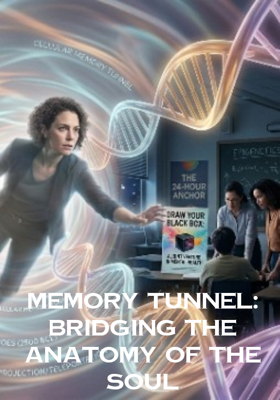
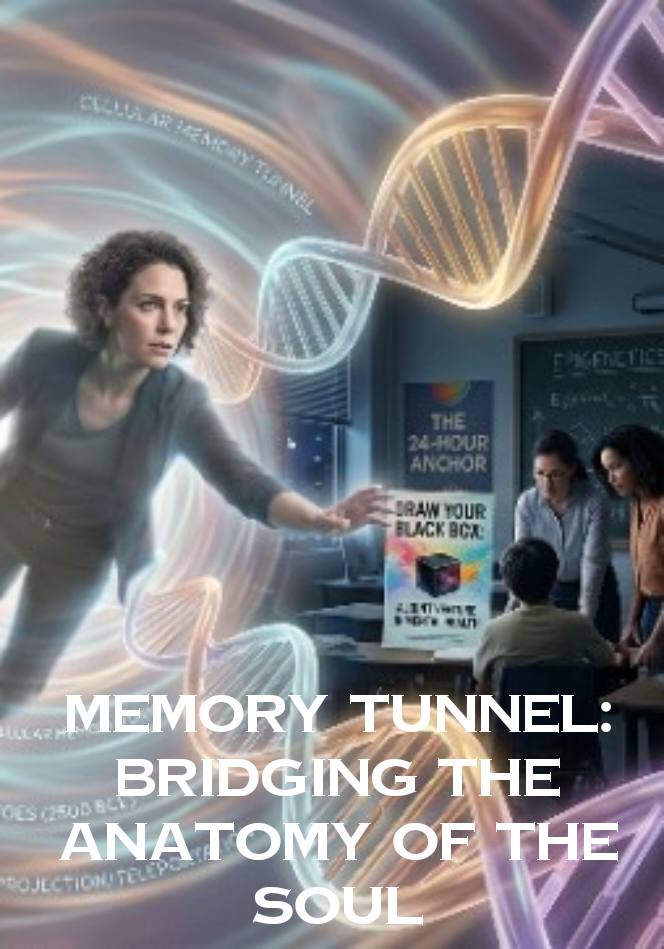
Elara felt her physical weight vanish. She wasn't standing in a room anymore; she was floating in a tunnel of shimmering, translucent light. This was the Memory Tunnel. It looked like a strand of DNA stretched to infinity, with each "rung" of the ladder representing a moment in time.
She looked through the lens of the shard.
The grey light of the workshop was replaced by a blinding, desert sun. She was in Babylon. But she wasn't an observer; she was looking through the eyes of the man who had forged the crown. She felt the heat of the forge on his skin, the calluses on his palms, and the deep, aching grief in his chest. He was forging this crown for a king he hated, mourning a son he had lost to the King's wars.
The words of a teacher, a voice whispered in the back of her mind. The deadliest weapon.
She saw a scene in the marketplace. A young boy, no older than ten, being berated by a scholar. The scholar’s words were sharp, mocking the boy’s simple clothes. Elara felt the boy’s heart sink—a weight so heavy it felt like lead. She realized with a jolt that the "black box" of depression wasn't a modern invention. It was an ancient shadow.
The Crisis of the Ten-Year-Old
In the memory, the boy looked at a nearby well. He didn't know what life was yet—he hadn't learned the "Human Anatomy" of his own soul. He only knew the sting of the words.
Elara tried to scream, to reach out, but she was an astral ghost. She was tethered to the shard, a passenger in a dead man's memory. She saw the boy’s hand reach for the edge of the well.
Push the decision, she thought with every ounce of her will. Just twenty-four hours. Wait for the storm to pass.
Whether it was her intervention or a quirk of fate, a woman—perhaps the boy's mother—called out his name. The boy startled, the spell of the "temporal storm" broken. He stepped back. The crisis peak had passed.
The scene shifted violently. Elara was pulled back through the tunnel, the cellular resonance of her body screaming in protest.
The Return to the Sound Mind
Elara slammed back into her chair in the workshop, gasping for air. Her hand was still pressed against the Aurelian Shard, but the metal was now hot to the touch.
“Elara! You were out for six minutes,” Marcus shouted, grabbing her shoulders. “Your heart rate spiked to 160. What did you see?”
Elara looked at her trembling hands. “I saw the anatomy of a tragedy,” she whispered. “I saw that we’ve been ignoring the most important syllabus for thousands of years.”
She stood up, her mind racing. The "Time Machine" had worked, but it hadn't shown her the secrets of the stars or the location of lost gold. It had shown her the continuity of human pain.
“We need to change the project, Marcus,” she said, her voice growing steady.
“The physics project? The Shard?”
“No. The human project. We spend all our time studying how cells divide and how gold oxidses, but we never teach people how to survive the 'temporal storms' of their own minds. We need a 'Joint Venture'—not just for scientists, but for everyone.”
The New Syllabus: A Legacy of Hope
In the weeks that followed, Elara Vance shifted her focus. She used her research into "Cellular Memory" to advocate for a new kind of education. She realized that observing a child's behavior with a sound mind was the only way to protect an exhausted mind that was ready to give up.
She organized a city-wide art competition. The prompt was simple: Draw the inside of your 'Black Box'.
On the day of the event, parents, teachers, and students walked through the gallery together. They weren't just looking at art; they were looking at the "Inner Anatomy" of their community. Beside each piece of art were verified source materials—pamphlets explaining the 3-hour peak of a crisis, the "One Day" strategy, and the power of the "Silent Watch."
One ten-year-old boy stood before a painting of a dark well. His father stood beside him, a hand on the boy's shoulder.
“I didn't know you felt like that sometimes,” the father whispered, looking at the dark colors his son had chosen.
“I didn't have the words to tell you,” the boy replied. “But the assignment helped me find them.”
The Final Lesson
Elara watched from the balcony of the hall. She still had the Aurelian Shard in her pocket, a constant reminder of the "Memory Tunnel."
She knew that words remained the deadliest weapon, but she also knew that they could be the strongest anchor. By making mental health a part of the daily syllabus—by treating it with the same rigor as biology or history—they were finally building a bridge across the gaps where so many had fallen.
She realized that the true "Time Machine" wasn't about visiting the past to change it. It was about bringing the wisdom of the past into the present to save the future.
The "Living Pylon" of human connection was growing, redirected by the ropes of empathy and the anchors of shared knowledge. It was a slow growth—as slow as a tree—but it was permanent.
“It’s not a one-day event, Marcus,” she said, looking out at the crowd of parents and children talking openly for the first time.
“No,” Marcus agreed, watching a teacher apologize to a student for a thoughtless comment made earlier that week. “It’s a joint venture.”
Elara smiled. History wouldn't repeat itself this time. They had finally learned to observe with a sound mind, ensuring that for the exhausted ones, there would always be a "tomorrow" worth waiting for.
Author's Note: This story is a tribute to those who act as anchors in the lives of others. Remember: The storm is temporary. The decision can be pushed. Just one more day.