Library

 Profile
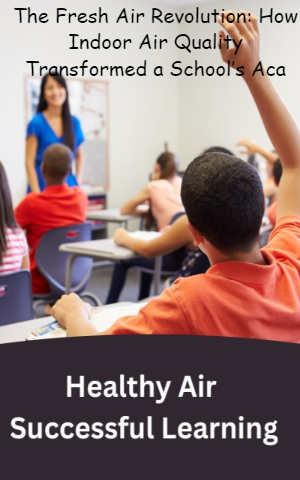
The Fresh Air Revolution: How Indoor Air Quality Transformed a School’s Academy
The Fresh Air Revolution: How Indoor Air Quality Transformed a School’s Academy

In the small town of Rivertown, the local elementary school, Meadowbrook Academy, was facing a quiet crisis. Teachers noticed that students were increasingly distracted and frequently complained of headaches and fatigue. Attendance rates were slipping, and academic performance seemed to be on a downward trend. Despite efforts to address these issues, no clear solution emerged, leaving educators frustrated and concerned about their students' well-being.
One crisp autumn morning, a new principal named Mrs. Emma Carter arrived at Meadowbrook Academy. With a background in environmental science and a passion for improving school environments, Mrs. Carter immediately began assessing the school's issues. During her initial walk-through, she couldn't help but notice the aging ventilation systems, the stale air in many classrooms, and the noticeable dust accumulating on shelves and corners.
Mrs. Carter decided to investigate further. She learned about a growing body of research linking indoor air quality (IAQ) with student performance and health. Studies showed that poor IAQ could lead to reduced cognitive function, increased absenteeism, and overall lower academic achievement. Armed with this knowledge, she was determined to make a change.
With a clear plan in mind, Mrs. Carter approached the school board with a proposal to overhaul the school's air quality management. Her proposal included installing air quality monitors, upgrading the ventilation systems, and implementing a regular cleaning schedule to reduce dust and allergens. The board was skeptical but agreed to a trial period, intrigued by the potential benefits.
Within weeks of implementing the changes, the transformation was remarkable. The new air quality monitors, such as the HibouAir devices, provided real-time data that helped the maintenance team keep track of CO2 levels, humidity, and particulate matter. Teachers noticed an immediate improvement. Students appeared more focused, less fidgety, and more engaged in their lessons. Attendance rates began to rise as fewer students fell ill, and the school nurse reported a decrease in visits related to respiratory issues and headaches.
The impact on academic performance was even more profound. Test scores began to improve, and teachers observed that students were participating more actively in class discussions and group work. Mrs. Carter's decision to invest in better IAQ had not only enhanced the physical environment but also fostered a more conducive learning atmosphere.
Word of Meadowbrook Academy's success spread quickly. Other schools in the district took notice and began to adopt similar measures. Mrs. Carter became a local hero, invited to speak at conferences and share her experience. Her efforts demonstrated how a seemingly simple change—improving indoor air quality—could lead to significant improvements in student health and academic performance.
In the end, Meadowbrook Academy's story was more than just a tale of transformation; it was a testament to the power of understanding and addressing the hidden factors that affect our daily lives. By prioritizing indoor air quality, Mrs. Carter and her team had not only revitalized a struggling school but also paved the way for healthier and more successful learning environments across the region.
And so, as the seasons changed and the air inside Meadowbrook Academy remained fresh and invigorating, the students thrived, their potential unleashed by the simple yet profound impact of clean, healthy air.