Library

 Profile
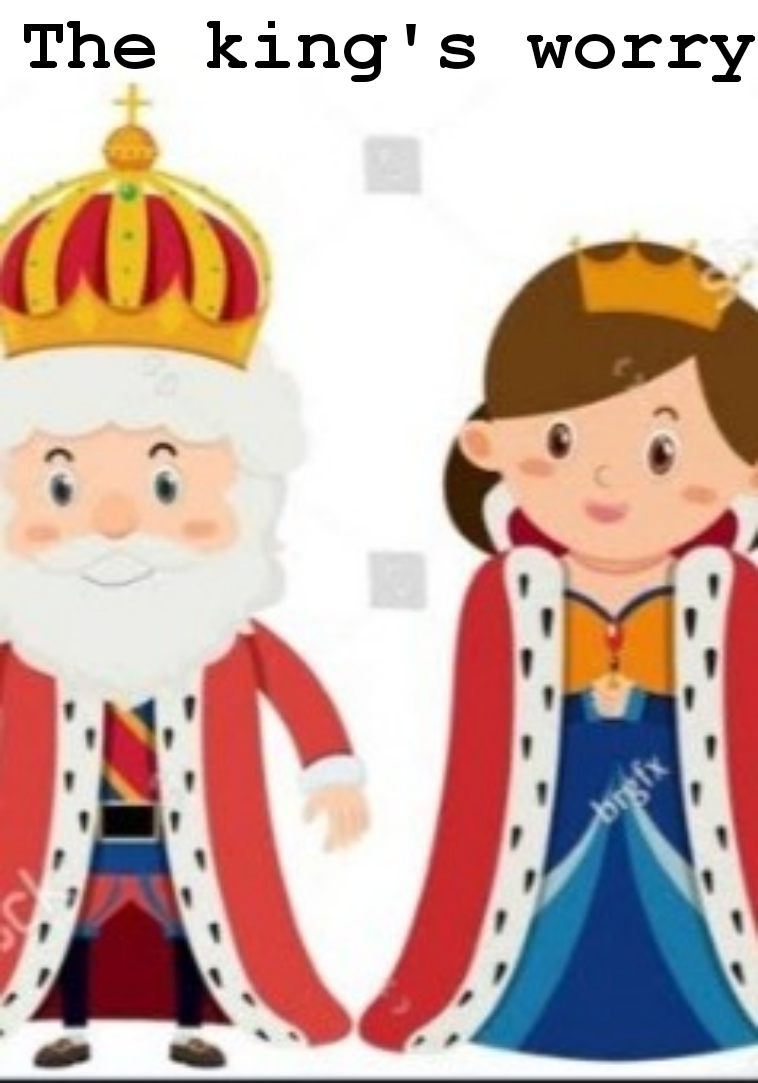
The King's Worry
The King's Worry

Long, long ago, in the south of India, there lived a king called Immortal Power. He ruled from a city called Maidens' Delight. He was a powerful king who wore his personal jewellery that dazzled with diamonds. They were the gifts of the kings, whom he had conquered in battle. The defeated kings had knelt before him and offered him these diamonds, accepting his supremacy. He was not only a great warrior, but a learned and wise king as well. The king's fame as a wise administrator and a man of great knowledge had reached the ears of even those who lived beyond the country's shores.
Despite his power, wisdom, and the fact that he was vastly admired both within and outside the country, the king was a sad man. There was only one reason for this. He had three sons, Rich Power, Fierce Power and Endless Power, and all three were idiots. They were sent to various gurus to learn, and, in some cases, the gurus came to teach them in the palace, but to no avail. They grew up as big, stout, greedy young men, but were as distant to learning, as the sky is to the earth. Finally, one day, the king and his ministers ran out of willing gurus to teach the stupid princes, leaving Immortal Power in despair. The king then summoned his ministers, his face a picture of great sadness.
"My dear advisers, you know that these sons of mine being uneducated, and being unwilling to be educated, lack wisdom. When I see or even think of them, I feel a pain that a thousand thorns, stuck to my body, would not cause."
The ministers shook their heads slowly in agreement.
"Unborn or dead sons will cause a little grief for some time, no doubt, but foolish sons will cause one much sadness throughout," wailed the king, echoing an old proverb.
"Of what use is a cow, which neither gives birth to a calf nor yields milk? Similarly, why beget a son who is an idiot and disobedient?" added the queen, quoting another proverb. "But we can't just despair like this, my dear," the king told his wife and ministers. "A way must
be found to awaken their intelligence."
"Your majesty, it takes a minimum of twelve years to impart some kind of elementary education, and the serious books on religion and life can be learnt after that," all the ministers, except one, said.
"But," said the lone dissenter, an old, wise man, "human life is limited and the princes are grown up already. Some way has to be found to educate the princes in a shorter period of time. For, as they say, education has no limits, but life being short, the important lessons can be picked and taught, as the swan's separate milk from water."
The king and his courtiers listened to the wise old minister, as he continued.
"I know a learned man here called Vishnu Sharma. He has a good reputation for great learning. Hand over the princes to him. He will make them wise in no time."
"So be it," said the king, with a twinkle in his eye. "Let the man be brought here immediately." Soldiers rushed to the ashram, hermitage, of Vishnu Sharma and brought him before his majesty in no time.
"Holy Sir," said the king, addressing him, "please do me a favour."
"Tell me, your majesty, what it is, and I shall consider whether it is possible." The princes were brought before Vishnusharma and introduced to him.
"Kindly make these sons of mine supreme masters of the art of practical life. I shall bestow upon you in return, not one, but one hundred land grants. יי
The learned man laughed.
"I am not a man, O king, who sells knowledge for land grants. But I will make your sons intelligent in six months' time. If I do not, I shall change my name. No, this is not an idle boast, and I do not say this to earn your land grant, for I have no use for that sort of wealth. I am eighty years old, and the objects of sensual desire have lost their charm. But, even at this frail, old age, I take the offer to educate your sons as a sporting challenge. Make a note of the date. If I do not make your sons supreme masters in the art of intelligent living in six months, your majesty, I give you the liberty of changing my name from Vishnusharma to anything you like."The king and his ministers were amused at this frank but very unusual pledge. But they were also happy. Happy, because nobody else had dared to give such an assurance and set a date for it."Come, my dear sons," the king asked the princes. "Go with the guru and fulfil our wishes."The princes nodded their heads, their faces beaming with a stupid smile as if to mock the promise that the guru had made. Vishnusharma took the boys to his ashram. The king, the queen and the courtiers bade them farewell, their looks, a mixture of worry and expectation.