Library

 Profile
Removing Asbestos In Your Roof - What Are The OHS Requirements
Removing Asbestos In Your Roof - What Are The OHS Requirements

If you live or work in a building that’s older than the 1970s, there’s a fair chance that the construction may contain asbestos or asbestos containing materials. Though regulations were implemented since the 70s, it was only in 2003 that a final and comprehensive ban on asbestos was imposed in Australia.
Why Is Asbestos Hazardous?
Asbestos, once hailed as a “miracle material” occurs naturally in the earth. It has been in use for centuries across the world, and was prized for being fire, corrosion and microbe resistant, easy to work with and transport and it is also very versatile.
If left undisturbed, asbestos is considered harmless, but with age and wear and tear, the fine fibers work loose. They enter the atmosphere, and then our lungs, causing blocks and congestion. Exposure to asbestos causes life-threatening conditions such as mesothelioma, lung cancer and asbestosis. The effects of exposure are not immediately felt, and in some cases could manifest after decades.
Repairs, restoration or renovation work on older buildings could put workers, neighbors and visitors at risk. There is a strict code of regulations enforced by the NOHS commission (National Occupational Health and Safety) or OHS that governs all work in the country. The commission has a strict code that regulates work on asbestos.
Asbestos In Your Roof: Where Is It?
Asbestos or asbestos containing materials can be found in a variety of places on your roof. They may be in the form of corrugated roofing on sheds, factories, garages or warehouses. Asbestos tiles were popular lightweight, fire-retardant options for roofs, as were tiles manufactured using a combination of cement and asbestos. Insulation, chimneys, gutters and felt underlays are other areas that could contain asbestos. Asbestos paint or coating for walls are another possible location to be inspected and tested.
OHS Requirements For Safe Removal
Managing the risks associated with removal of an asbestos roof is the responsibility of several persons. This is certainly not the work for the average DIY enthusiast as they won’t have the skills, training, permissions, license and experience for the job.
Many firms specialize in asbestos roof removal, and they may offer inspection as part of the total package. However, it is important to confirm whether they hold the correct license required to remove friable asbestos. In some states or territories, removal of non-friable asbestos must also be notified to the state or territory OHS. For more information, visit Eastern Melbourne Roofing for asbestos removal.
An asbestos inspection will give you details of the location, quantity and condition of asbestos and asbestos containing materials on the roof. The inspection report forms the basis for creating a comprehensive removal plan. You will have to sign a detailed contract with the removalist to undertake the job. Go through the paperwork in detail before you sign up.
Once you have firmed up on time and date for the project, inform occupants of the building or your family, keep children and pets out of the way for the duration, message your neighbors about the removal and the risks involved so that they don’t plan any outdoor events during this time. If this is a commercial building, inform all employees well ahead of time.
All the necessary permits and licenses should be in place before work begins. A risk assessment has to be done by an authorized person ahead of the project. The company that does the work must take this report into consideration before they make their removal plan.
If regulations require it, the details of the removal plan have to be conveyed to the OHS authority of the State or Territory. You will also get a copy of this plan. It will include details of removal, cleaning of all the equipment used, and finally, the safe disposal of the asbestos materials removed.
The removalist team will create a safety perimeter around the work area. Safety equipment, protective clothing, masks, gloves and boots, scaffolding, crane and tools have to be assembled and taken up to the roof. All workers involved in the project have to be informed in writing about the hazards of the project, and they must be aware of the latest legislation regarding asbestos removal works.
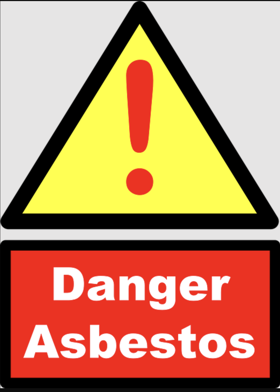
Before the work begins, the removalist company must have an emergency plan in place, along with a first aid kit and location of the nearest hospital and fire station. Security signage and barriers must be put up around the site to prevent entry of non-authorized people.
Generally, removal is done using wet methods and not dry to prevent loose fibers from entering the atmosphere. The asbestos containing area is sprayed thoroughly with cold water so that it is wet but there should be minimal run-off. Dry removal must be used only in case there is electrical equipment involved. The workers must take adequate protection in such a case.
Manual tools are usually used to remove asbestos in small sections. Workers may also use special vacuum cleaners to clean dust and small pieces when a dry removal method is used. Monitoring of surrounding air quality has to be done regularly during the process. At the end of work, the entire area has to be safely decontaminated according to OHS standards.
Finally, the waste must be filled into a sturdy, covered drum or bin and transported safely to a suitable landfill in compliance with the state or territory regulation. You will then get a final clearance certificate.